
Bad Habits for Teeth Which Harm Them
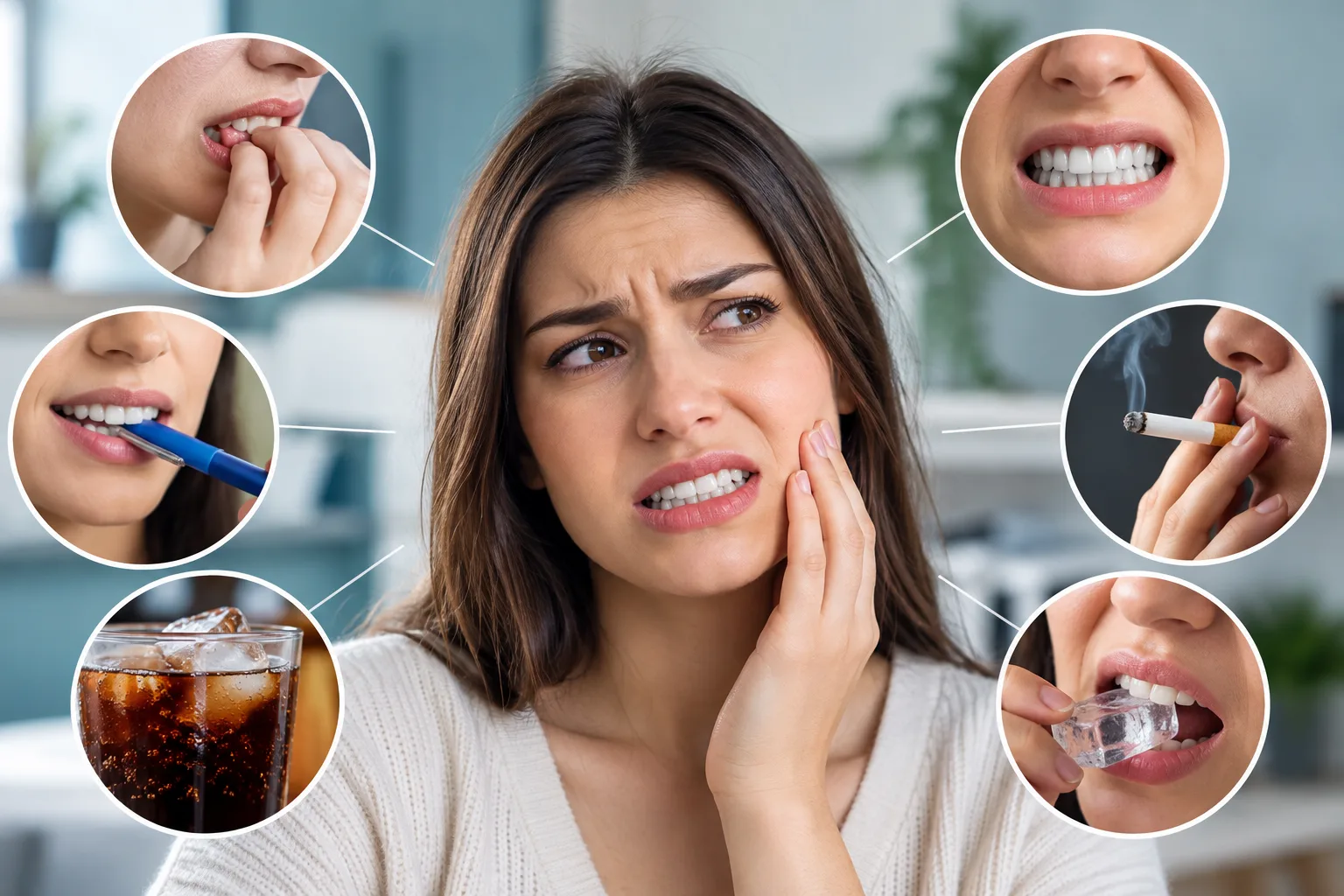
Your daily habits can have a bigger impact on your teeth than you may realise. While brushing, flossing, and regular dental visits are important for maintaining oral health, certain everyday habits can gradually weaken your teeth, irritate your gums, or increase the risk of dental problems.
Some habits may seem harmless because they do not cause immediate pain or visible damage. However, repeating them regularly can contribute to enamel wear, tooth sensitivity, cracks, cavities, and other oral health concerns.
What Everyday Habits Can Damage Your Teeth?
Teeth are strong, but they are not indestructible. Certain habits can place unnecessary pressure on your teeth or expose them to conditions that increase the risk of damage.
Common habits that may harm your teeth include:
- Chewing ice or other hard objects
- Using your teeth to open packages
- Biting your nails
- Grinding or clenching your teeth
- Brushing too aggressively
- Frequently consuming sugary or acidic foods and drinks
- Using tobacco products
- Skipping regular dental visits
- Snacking frequently without maintaining proper oral hygiene
- Ignoring dental pain or other changes in your mouth
Changing these habits can help reduce unnecessary stress on your teeth and support better oral health.
Is Chewing Ice Bad for Your Teeth?
Chewing ice may seem like a harmless habit, particularly because ice melts easily. However, biting down on hard pieces of ice can place significant pressure on your teeth.
Regular ice chewing may increase the risk of:
- Cracked teeth
- Chipped teeth
- Damage to existing fillings or restorations
- Tooth sensitivity
- Jaw discomfort
Instead of chewing ice, allow it to melt in your mouth. If you regularly chew ice and notice pain, sensitivity, or a damaged tooth, schedule a dental examination. If a tooth has already been damaged, restorative dental care may be needed to protect and restore it.
Why Should You Avoid Using Your Teeth as Tools?
Your teeth are designed for biting and chewing food, not for opening packages, tearing labels, cutting tape, or holding objects.
Using your teeth as tools can place uneven pressure on them and may result in:
- Chipped teeth
- Cracks
- Broken restorations
- Damage to dental crowns or fillings
- Jaw discomfort
Although using your teeth to open something may save a few seconds, it can lead to an unexpected dental problem. Keep scissors or other appropriate tools nearby instead.
If you chip or damage a tooth, emergency dental care may be appropriate depending on the severity of the injury.
Can Nail Biting Damage Your Teeth?
Nail biting is another common habit that can affect your oral health. Repeatedly biting your nails can put pressure on the front teeth and may contribute to chips or worn edges over time.
Nail biting may also:
- Place additional stress on the jaw
- Affect the edges of the teeth
- Transfer bacteria from your hands into your mouth
- Irritate the tissues around the nails
If nail biting has become a regular habit, finding alternative ways to manage the urge can help protect your teeth.
How Does Teeth Grinding Affect Your Teeth?
Teeth grinding, also called bruxism, can occur during the day or while you are asleep. Some people may not realise they grind or clench their teeth until a dentist notices signs of wear.
Repeated grinding can contribute to:
- Worn tooth surfaces
- Tooth sensitivity
- Cracked or damaged teeth
- Jaw discomfort
- Facial muscle tenderness
- Damage to certain dental restorations
If you wake up with jaw discomfort, notice unusual tooth wear, or frequently clench your teeth, speak with your dentist. A dental examination can help determine whether grinding may be contributing to your symptoms.
Depending on your needs, your dentist may also discuss custom mouthguards or other approaches that may help protect your teeth.
Can Brushing Too Hard Harm Your Teeth?
Brushing your teeth regularly is essential, but more pressure does not necessarily mean cleaner teeth. Brushing too aggressively can contribute to enamel wear and gum irritation.
Signs that you may be brushing too hard can include:
- Gum irritation
- Gum recession
- Increased tooth sensitivity
- Worn areas near the gumline
Use a soft-bristled toothbrush and gentle, controlled movements when brushing. Your dentist can also demonstrate an appropriate brushing technique if you are unsure about your routine.
If you are experiencing sensitivity, tooth sensitivity treatment can be discussed during a dental evaluation.
How Can Sugary and Acidic Foods Affect Your Teeth?
Frequent exposure to sugar can increase the risk of tooth decay, while acidic foods and drinks can contribute to enamel erosion.
Examples of habits that may increase dental risk include:
- Frequently drinking sugary beverages
- Regularly consuming sweets throughout the day
- Sipping acidic drinks for long periods
- Consuming acidic foods frequently without allowing your mouth time to recover
You do not necessarily need to eliminate every food you enjoy. Instead, consider reducing how frequently your teeth are exposed to sugary or acidic foods and maintain good oral hygiene.
Regular dental cleanings can also help remove plaque and tartar that cannot always be effectively removed through brushing and flossing alone.
Why Is Using Tobacco Harmful to Oral Health?
Tobacco use can have significant effects on oral health. It can contribute to gum problems, tooth staining, bad breath, and other dental concerns.
Tobacco use may also make it more difficult to maintain healthy gums and can affect healing after certain dental procedures.
If you use tobacco and are concerned about your oral health, discuss your concerns with your dental team. Regular dental examinations can help monitor your teeth and gums for changes.
Why Should You Not Ignore Dental Pain?
One of the most harmful habits for your teeth is delaying dental care when something feels wrong.
A toothache, sensitivity, swelling, bleeding gums, or a damaged tooth may indicate an underlying dental problem. Waiting for symptoms to disappear does not necessarily address the cause.
Ignoring dental symptoms may allow certain problems to become more complicated.
Contact your dentist if you experience:
- Persistent tooth pain
- Increasing sensitivity
- Swelling around a tooth or gum
- Pain when biting
- A chipped or cracked tooth
- Bleeding or swollen gums
- Changes in an existing filling or crown
A professional examination can help identify the cause and determine whether treatment is necessary. If you are experiencing severe or sudden dental pain, emergency dental treatment may be appropriate.
Why Are Regular Dental Visits Important?
Even if your teeth feel healthy, regular dental examinations can help identify problems that may not yet cause noticeable symptoms.
Your dentist may evaluate:
- Your teeth for signs of decay or damage
- Your gums for inflammation or other concerns
- Existing fillings, crowns, or other restorations
- Signs of tooth wear
- Areas that may require additional attention
Regular professional care, combined with good daily oral hygiene, can help you maintain your teeth and address potential problems earlier.
Learn more about general dentistry services to understand the different types of preventive and restorative care available.
How Can You Protect Your Teeth From Harmful Habits?
Protecting your teeth does not require complicated changes. Start by becoming aware of habits that may be placing unnecessary stress on your teeth.
You can help protect your oral health by:
- Avoiding chewing ice and other hard objects
- Using appropriate tools instead of your teeth
- Brushing gently with a soft-bristled toothbrush
- Flossing every day
- Limiting frequent sugary and acidic exposures
- Wearing a mouthguard during recommended sports activities
- Discussing teeth grinding with your dentist
- Avoiding tobacco products
- Scheduling regular dental examinations
- Seeking care when you notice persistent dental symptoms
Small changes to your daily routine can help reduce unnecessary wear and protect your teeth over time.
Dental Care at SoFlo Dental
At SoFlo Dental, we provide comprehensive dental care to help patients maintain healthy teeth and gums.
Our team can evaluate dental concerns such as tooth damage, sensitivity, tooth decay, gum problems, and signs of excessive tooth wear. We can also provide personalised guidance on daily oral hygiene and habits that may affect your dental health.
If you are concerned that a daily habit may be affecting your teeth, a professional dental examination can help you understand your oral health and determine whether any treatment is needed.
Protect Your Teeth From Harmful Habits
Your everyday habits can have a lasting effect on your oral health. If you have noticed tooth sensitivity, unusual wear, jaw discomfort, or other changes in your teeth, schedule an appointment with SoFlo Dental for a professional evaluation.
Frequently Asked Questions on Bad Habits for Teeth
Q: What is the worst habit for your teeth?
There is no single habit that is harmful for everyone. Habits such as chewing ice, using teeth as tools, grinding or clenching, aggressive brushing, frequent sugar exposure, and delaying dental care can all contribute to different types of dental problems.
Q: Can bad habits permanently damage teeth?
Some habits can contribute to enamel wear, cracks, chips, gum recession, or other dental damage. The extent of damage depends on the habit, how frequently it occurs, and individual oral health factors. A dentist can evaluate any existing damage and recommend appropriate care.
Q: Is chewing ice bad for your teeth?
Yes. Chewing hard ice can place significant pressure on teeth and may increase the risk of cracks, chips, sensitivity, or damage to existing dental restorations. It is safer to allow ice to melt rather than chewing it.
Q: Can brushing too hard damage your teeth?
Brushing too aggressively can contribute to gum irritation, gum recession, enamel wear, and tooth sensitivity. Using a soft-bristled toothbrush and gentle brushing movements can help reduce unnecessary pressure on your teeth and gums.
Q: When should I see a dentist about a harmful dental habit?
You should consider a dental evaluation if you notice persistent sensitivity, tooth pain, chipped or cracked teeth, unusual tooth wear, jaw discomfort, gum changes, or damage to an existing dental restoration. A dentist can assess whether the habit has affected your oral health and discuss ways to prevent further damage.
SCHEDULE YOUR VISIT!
For appointments or inquiries.
*Your Full Name
*Location
*Your Email
*Your phone number
*Message body
I allow this website to store my submission so they can respond to my inquiry.
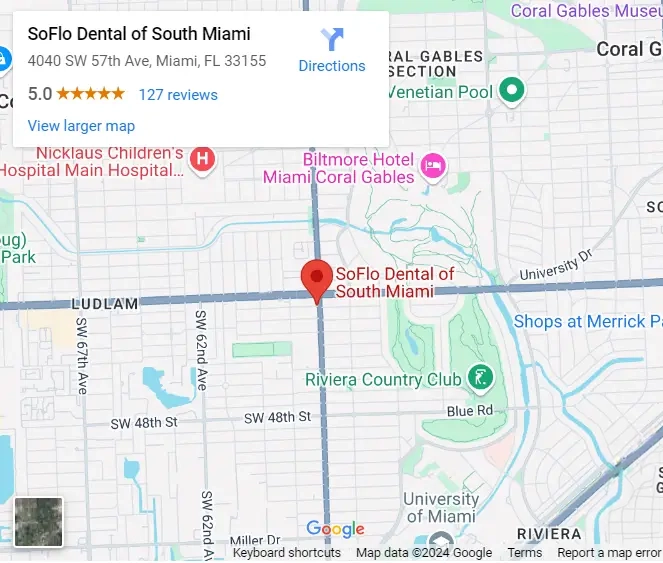
OUR TWO LOCATIONS
Kendall Miami & South Miami
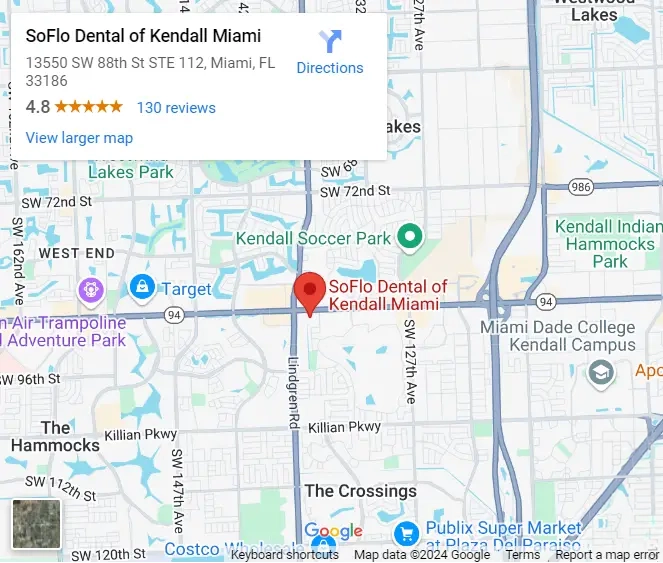
13550 SW. 88th St., Unit #112, Miami, FL 33186
Working Hours
Mon: 11:30 a.m. – 8:00 p.m.
Tue: 9:00 a.m. – 5:00 p.m.
Wed: 11:30 a.m. – 8:00 p.m.
Thu: 9:00 a.m. – 4:30 p.m.
Fri: 9:00 a.m. – 4:30 p.m.
Sat: By Appointment Only
Sun: Closed
4040 SW 57th Ave, Miami, FL 33155
Working Hours
Mon: 9:00 a.m. – 5:00 p.m.
Tue: 9:00 a.m. – 5:00 p.m.
Wed: 8:30 a.m. – 8:00 p.m.
Thu: 9:00 a.m. – 5:00 p.m.
Fri: 9:00 a.m. – 5:00 p.m.
Sat: By Appointment Only
Sun: Closed
Welcome to SoFlo Dentistry, we provide exceptional dental care tailored to your needs. For appointments or inquiries.


