
Can Dental Crowns Be Whitened?
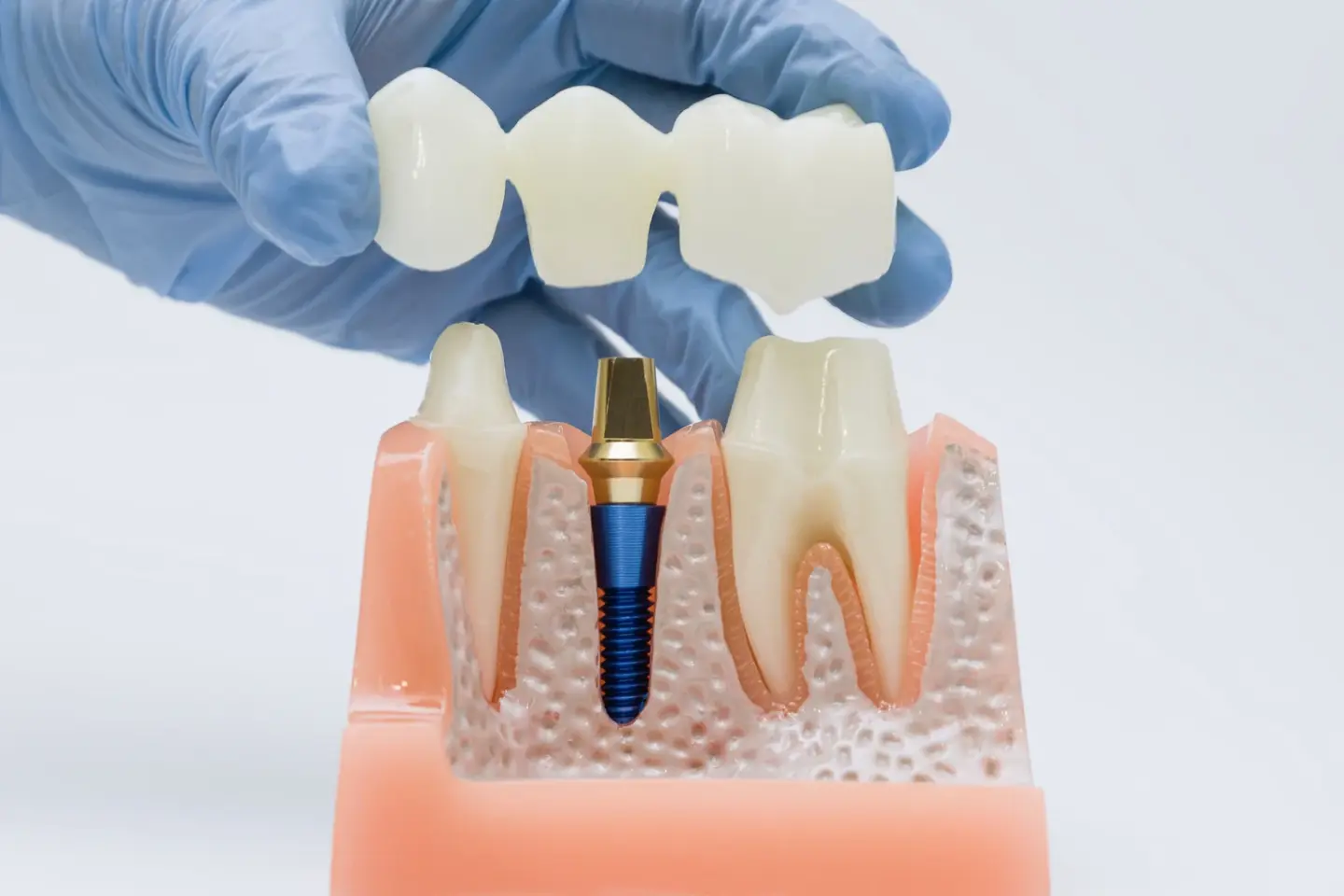
No, dental crowns cannot be whitened. The materials used to make crowns, such as porcelain, ceramic and zirconia, do not react to bleaching gels the way natural enamel does. Whitening products lighten your natural teeth only, and a crown stays exactly the shade it was made.
That sounds like bad news if you have a crown on a front tooth and your other teeth are getting brighter, but it is far from the end of the story. The order in which you do things matters a great deal, and there are good options if a crown no longer matches the teeth around it.
Below, we cover why crowns do not whiten, what to do if one looks darker than your smile, and how to keep your crowns looking fresh for as long as possible. If you want to read about the restoration itself first, our dental crowns service explains how they work.
Why Crowns Do Not Respond to Whitening
Whitening works by letting a peroxide gel pass into the tiny pores of your enamel and break up the stain molecules that have settled there. A crown has no pores like that. Porcelain and zirconia are dense, glazed and non porous, so there is nowhere for the gel to go and nothing for it to lift.
According to Colgate's oral health information, crowns are made from strong, durable materials that are not damaged by whitening products. So the gel will not harm a crown, but it will not brighten it either. The same goes for veneers, tooth colored fillings and bonding, which is worth remembering if you have several restorations in your smile.
If you want to understand what is available, our post on the best material for dental crowns compares the options in more detail.
What Happens When You Whiten Teeth Around a Crown
This is where people get caught out. Say you have a porcelain crown on an upper front tooth, and you whiten your teeth with trays or strips at home. Your natural teeth might lighten by a few shades. The crown stays put. Suddenly it looks yellow or gray next to its neighbors, when before the match was perfect.
The crown did not change. Your natural teeth did. That is why dentists generally ask patients who want brighter teeth to do their whitening first, and only then have a new crown made to match.
Why a Crown Might Look Darker Than Your Natural Teeth
Not every crown that looks off is the result of whitening. A few things can make one stand out.
Surface stains. Coffee, tea, red wine and tobacco can leave a film on the surface of a crown, especially around the edges and in tiny scratches. This kind of stain is on the crown, not in it, so it can often be cleaned away.
The tooth underneath. A crown covers a prepared tooth. If the margin of the crown has worn or the gum has pulled back, a darker edge of the tooth or, with a porcelain fused to metal crown, the metal underneath can show at the gumline.
Wear and aging. Glaze can wear thin over many years, which makes a crown look duller than it did on the day it was fitted. Resin based crowns, which are more often used as temporary or short term restorations, tend to pick up stain more readily than porcelain or zirconia.
A natural tooth that changed. If the tooth next to your crown has darkened with age or after treatment, the crown may look lighter than it used to by comparison.
Your Options If a Crown No Longer Matches
Have the surface cleaned and polished
If the issue is surface stain, a professional cleaning is the first step. A hygienist can remove built up stain and plaque without scratching the crown, and polishing brings back some shine. It is worth asking about this before you assume you need a new crown. Our overview of the types of dental cleaning explains what a hygienist can do.
Whiten the natural teeth, then replace the crown
If you want a brighter overall smile, the usual route is to whiten your natural teeth to the shade you like, wait for the color to settle, and then have the crown remade to match. The wait is usually a week or two, because the shade can shift slightly just after treatment. Your dentist will advise on timing.
This means paying for a new crown, which is the part people dislike hearing. But it is the only way to change the shade of a crown. If you are interested in brightening your natural teeth first, you can read about our teeth whitening service.
Leave the crown alone
Sometimes the best answer is to do nothing. If the crown is in good shape, sits on a back tooth and is barely visible when you smile, a slight shade difference may not bother you. Replacing a healthy crown only for color is a decision to make calmly, not in a rush.
Whitening Before You Get a Crown: Best Order of Events
If you know you will need a crown and you also want whiter teeth, plan the sequence from the start.
- Talk to your dentist about both goals at the first appointment.
- Whiten your natural teeth first, if your dentist agrees it is suitable for you.
- Wait for the shade to settle, usually a week or two.
- Have the shade taken for your crown, in good natural light, when the teeth are at their final color.
This is especially important for a front tooth, where a mismatch is easy to see. Our post on dental crowns for broken front teeth goes into material choices for the teeth people see first.
For crowns made in a single visit, the shade is chosen digitally during the same appointment, which makes it all the more important to have your natural teeth at the color you plan to keep. Our crowns page notes that same day crowns are available using CEREC technology.
Which Crown Materials Hold Their Color Best?
- Zirconia: very resistant to staining, strong and durable, and often used on back teeth or where strength matters most.
- Porcelain: resists stain well and closely resembles natural translucency, so it is often used on front teeth and other visible areas.
- Porcelain fused to metal: the porcelain layer resists stain, but a dark line can show at the gum if the gums recede. It is used where strength and a natural look are both needed.
Our crowns page describes all three of these as options, and the right one depends on where the tooth is and how you bite.
How to Keep Your Crowns Looking Bright
You cannot whiten a crown, but you can protect it. Brush twice a day with a non abrasive toothpaste, since gritty whitening toothpastes can dull a glazed surface over time. Floss daily around the crown, because plaque at the gumline is a bigger risk to the tooth underneath than stain is.
Go easy on coffee, tea, red wine and tobacco, or rinse with water afterward. Keep up with regular cleanings and checkups so small problems are spotted early. And avoid chewing ice, pens or hard candy, which can chip even a strong crown. There is more practical advice in our tips for caring for your dental crown. Our crowns page notes that most crowns last 10 to 15 years, possibly longer with good care.
Common Myths About Crowns and Whitening
"A whitening toothpaste will brighten my crown." It will not. Whitening toothpastes either contain mild abrasives that polish surface stain off natural enamel, or low strength chemicals that need time and contact to work on enamel. A crown has neither the pores nor the need. Used heavily, an abrasive toothpaste can scratch glaze and make a crown hold stain more easily.
"A crown that is too white will fade." Porcelain and zirconia do not fade the way natural teeth darken with age. If a crown looks too bright for you, the fix is a remake in a different shade, and it is worth saying so when the shade is chosen rather than hoping it settles.
"Whitening will make my crown fall off." Whitening gel is not expected to loosen a well fitted crown. A crown that has come loose usually has a problem with the cement, the fit or the tooth underneath, and it needs to be seen, not blamed on the whitening.
"Only the front tooth needs to match." People tend to look at the whole smile, not one tooth. If you are changing the color of your natural teeth, it can be worth asking whether any other front restorations will look different once you are done.
If you have a crown that is chipped, rough or discolored at the edge, mention it at your exam. Problems like those are about the health of the crown rather than its shade, and they are best handled before they turn into something bigger.
Thinking About a Crown or a Brighter Smile?
If your crown looks different from your teeth, or you are planning a crown and a whiter smile at the same time, we can look at the options with you. Book an appointment at our Kendall or South Miami office and we will check the crown, talk through your goals and suggest the order that makes sense.
Frequently Asked Questions on Dental Crown Whitening
Can you whiten a crown with whitening strips or toothpaste?
No. Strips, gels, trays and whitening toothpaste work on natural enamel, not on porcelain or zirconia. They will not damage a healthy crown, but they will not change its color, and abrasive toothpastes can dull the surface.
Will whitening damage my dental crowns?
Whitening gel is not expected to harm a crown, but it can irritate your gums and make natural teeth sensitive, particularly if used too often. It is still sensible to check with your dentist before starting, especially if you have older crowns or exposed margins.
Why is my crown a different color from my teeth?
It may be a mismatch from the start, a surface stain, a change in your natural teeth after whitening or age, or a visible edge at the gumline. A quick exam will show which it is.
Can a stained crown be polished?
Often, yes. If the stain is on the surface, a professional cleaning and polish can improve the look a lot. Stain that is deeper in the material or comes from the tooth underneath will not polish away.
Should I whiten my teeth before getting a crown?
If you want whiter teeth, yes. Whitening first means your dentist can match the crown to your final shade rather than to a color you are about to change.
SCHEDULE YOUR VISIT!
For appointments or inquiries.
*Your Full Name
*Location
*Your Email
*Your phone number
*Message body
I allow this website to store my submission so they can respond to my inquiry.
OUR TWO LOCATIONS
Kendall Miami & South Miami
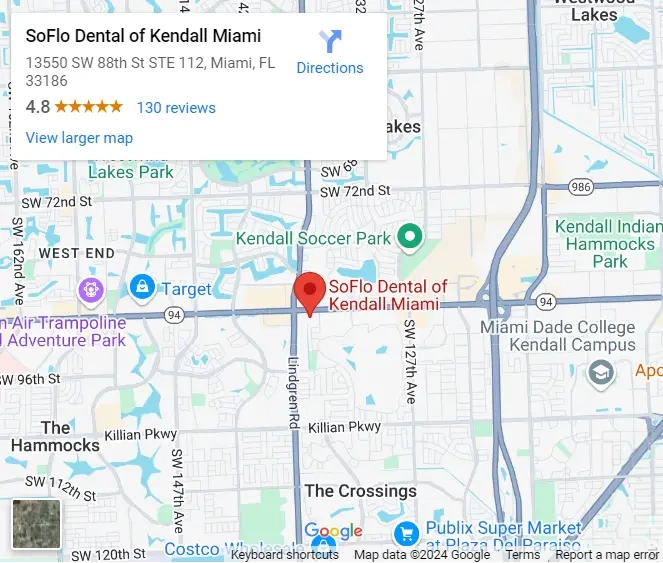
13550 SW. 88th St., Unit #112, Miami, FL 33186
Working Hours
Mon: 11:30 a.m. – 8:00 p.m.
Tue: 9:00 a.m. – 5:00 p.m.
Wed: 11:30 a.m. – 8:00 p.m.
Thu: 9:00 a.m. – 4:30 p.m.
Fri: 9:00 a.m. – 4:30 p.m.
Sat: By Appointment Only
Sun: Closed
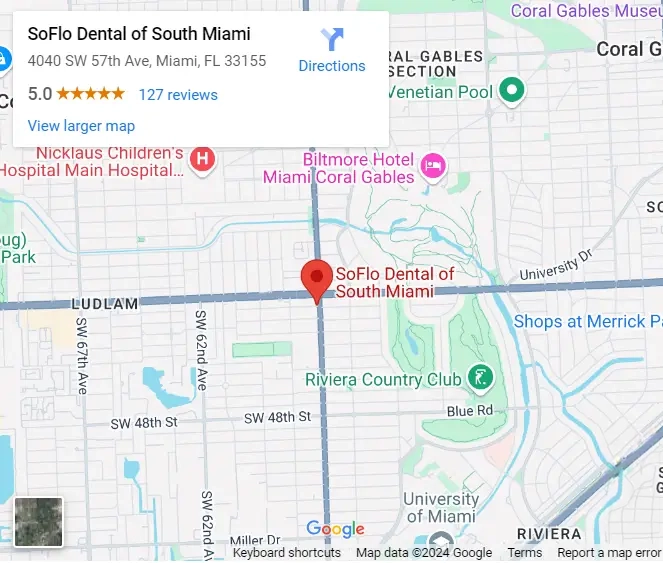
4040 SW 57th Ave, Miami, FL 33155
Working Hours
Mon: 9:00 a.m. – 5:00 p.m.
Tue: 9:00 a.m. – 5:00 p.m.
Wed: 8:30 a.m. – 8:00 p.m.
Thu: 9:00 a.m. – 5:00 p.m.
Fri: 9:00 a.m. – 5:00 p.m.
Sat: By Appointment Only
Sun: Closed

Welcome to SoFlo Dentistry, we provide exceptional dental care tailored to your needs. For appointments or inquiries.


