
What Are the Warning Signs That a Dental Abscess Is a Medical Emergency?

A persistent toothache may seem like something you can put off for a few days, but when the pain is caused by a dental abscess, delaying treatment can have serious consequences. A dental abscess is a pocket of infection that forms around a tooth or in the surrounding gum tissue. While some abscesses begin with mild discomfort, the infection can spread rapidly if left untreated, potentially affecting the jaw, face, neck, or even other parts of the body. At SoFlo Dental of Kendall Miami and SoFlo Dental of South Miami, we provide prompt emergency dental care for patients experiencing dental infections and abscesses. Recognizing the warning signs of a dental abscess can help you seek treatment before the infection becomes a medical emergency.
What Is a Dental Abscess?
A dental abscess is a bacterial infection that causes pus to collect inside or around a tooth. It often develops when bacteria enter the tooth through a deep cavity, cracked tooth, broken filling, or advanced gum disease. There are several types of dental abscesses, including:
- Periapical abscess: Forms at the tip of the tooth root, usually due to an untreated cavity or dental trauma.
- Periodontal abscess: Develops in the gums next to a tooth, often as a result of advanced gum disease.
- Gingival abscess: Affects only the gum tissue and is commonly caused by food particles or foreign objects becoming trapped beneath the gums.
Regardless of the type, every dental abscess requires professional evaluation and treatment.
Common Symptoms of a Dental Abscess
Many abscesses begin with symptoms that gradually worsen over time. Early warning signs may include:
- Persistent, throbbing tooth pain
- Pain when biting or chewing
- Sensitivity to hot or cold foods
- Swollen or tender gums
- A pimple-like bump on the gums
- Bad breath or an unpleasant taste in the mouth
- Facial tenderness near the affected tooth
These symptoms should never be ignored, even if the pain temporarily improves.
Warning Signs That a Dental Abscess Is a Medical Emergency
Certain symptoms suggest that the infection may be spreading beyond the tooth and requires immediate emergency care.
Rapid Swelling of the Face or Jaw
Significant swelling in the face, jaw, or gums may indicate that the infection is spreading into nearby tissues. Rapidly increasing swelling should always be evaluated immediately, especially if it continues to worsen over a few hours.
Difficulty Swallowing
If swallowing becomes painful or difficult, the infection may be extending into the deeper tissues of the neck. This symptom requires urgent medical attention because swelling can continue to progress quickly.
Trouble Breathing
Difficulty breathing is one of the most serious warning signs of a spreading dental infection. Swelling around the mouth, jaw, or throat can partially block the airway, creating a life-threatening emergency. Seek emergency medical care immediately if breathing becomes difficult.
Fever and Chills
A fever often indicates that your body is fighting an active infection. If a dental abscess is accompanied by:
- Fever
- Chills
- Sweating
- General weakness
the infection may be spreading beyond the tooth and should be treated promptly.
Swollen Lymph Nodes
Tender or enlarged lymph nodes beneath the jaw or in the neck often develop as the immune system responds to infection. When combined with severe tooth pain or facial swelling, swollen lymph nodes may indicate a more advanced infection.
Severe, Constant Tooth Pain
A toothache that becomes intense, throbbing, and persistent should never be ignored. Pain that radiates into the jaw, ear, or neck often signals that the infection has reached deeper tissues.
Pus or Drainage in the Mouth
An abscess may rupture and begin draining into the mouth. You may notice:
- Thick yellow or white fluid
- A sudden bad taste
- Temporary pain relief
Although drainage may reduce pressure, the infection remains present and still requires professional treatment.
Difficulty Opening Your Mouth
Swelling and inflammation around the jaw muscles may make it difficult to fully open your mouth. This condition, sometimes called limited jaw opening, often indicates a more significant infection that requires immediate evaluation.
Can a Dental Abscess Go Away on Its Own?
No. Even if an abscess begins draining or the pain temporarily decreases, the infection itself does not disappear without treatment. Without proper care, bacteria can continue spreading into surrounding bone, soft tissues, and, in rare cases, the bloodstream. Ignoring an abscess increases the risk of serious complications and tooth loss.
What Causes a Dental Abscess?
Several dental problems can allow bacteria to enter the tooth or gums, including:
- Untreated cavities
- Cracked or broken teeth
- Deep dental decay
- Gum disease
- Failed dental restorations
- Dental trauma
- Poor oral hygiene
Regular dental examinations help identify these problems before they develop into serious infections.
How Is a Dental Abscess Treated?
Treatment depends on the location and severity of the infection. Your dentist may recommend:
Draining the Abscess
Removing the accumulated pus helps relieve pressure and reduce bacterial infection.
Root Canal Therapy
If the infection has reached the pulp inside the tooth, root canal therapy can remove infected tissue while preserving the natural tooth.
Tooth Extraction
If the tooth cannot be saved, extraction may be necessary to eliminate the source of infection and protect surrounding teeth. Your dentist can also discuss replacement solutions such as dental implants to restore function.
Antibiotics
Antibiotics may be prescribed when:
- The infection has begun spreading.
- Facial swelling is present.
- The immune system is compromised.
- Additional treatment is needed before a dental procedure.
Antibiotics alone usually do not eliminate the source of the infection and are often combined with other dental treatments.
What to Do If You Think You Have a Dental Abscess
While waiting to see your dentist:
- Rinse gently with warm salt water.
- Continue brushing carefully around the area.
- Avoid chewing on the affected tooth.
- Take over-the-counter pain medication as directed, if appropriate.
- Do not attempt to drain the abscess yourself.
Most importantly, arrange an emergency dental appointment as soon as possible.
How to Reduce Your Risk of a Dental Abscess
Many dental abscesses can be prevented through good oral health habits. You can lower your risk by:
- Brushing twice daily with fluoride toothpaste.
- Flossing every day.
- Scheduling routine dental checkups and cleanings.
- Treating cavities promptly.
- Repairing cracked or broken teeth early.
- Managing gum disease before it progresses.
Preventive care remains the best defense against serious dental infections.
Prompt Treatment Can Protect Your Health
A dental abscess is much more than a painful toothache. It is a bacterial infection that can quickly become serious if left untreated. While early treatment often prevents complications, symptoms such as facial swelling, fever, difficulty swallowing, or trouble breathing require immediate attention. At SoFlo Dental of Kendall Miami and SoFlo Dental of South Miami, we provide same-day emergency treatment whenever possible to diagnose and treat dental abscesses before they threaten your oral and overall health. If you suspect you have a dental abscess, don't delay seeking professional care.
Need Emergency Care for a Dental Abscess?
If you're experiencing severe tooth pain, swelling, or signs of a dental infection, don't wait for the problem to worsen. Contact SoFlo Dental of Kendall Miami or SoFlo Dental of South Miami right away for prompt evaluation and emergency treatment. Our experienced team is here to relieve your discomfort, treat the infection, and help protect your long-term oral health.
Frequently Asked Questions
Q: How do I know if my toothache is caused by an abscess?
A: An abscess often causes severe, throbbing pain that may be accompanied by swelling, sensitivity to hot or cold, a pimple-like bump on the gums, bad breath, or a foul taste in the mouth. Only a dental examination can confirm the diagnosis.
Q: Should I go to the emergency room for a dental abscess?
A: If you have facial swelling, difficulty breathing, difficulty swallowing, or a high fever, seek emergency medical care immediately. These symptoms may indicate that the infection is spreading and requires urgent treatment.
Q: Will antibiotics cure a dental abscess?
A: Antibiotics can help control the spread of infection but usually cannot eliminate the source on their own. Most dental abscesses also require procedures such as drainage, root canal therapy, or tooth extraction.
Q: Can a dental abscess spread to other parts of the body?
A: Yes. If left untreated, the infection can spread into nearby tissues, the jawbone, neck, or, in rare cases, the bloodstream. This is why prompt treatment is so important.
Q: How can I prevent a dental abscess?
A: Practising good oral hygiene, treating cavities early, repairing damaged teeth, managing gum disease, and attending regular dental checkups can significantly reduce your risk of developing a dental abscess.
SCHEDULE YOUR VISIT!
For appointments or inquiries.
*Your Full Name
*Location
*Your Email
*Your phone number
*Message body
I allow this website to store my submission so they can respond to my inquiry.
OUR TWO LOCATIONS
Kendall Miami & South Miami

13550 SW. 88th St., Unit #112, Miami, FL 33186
Working Hours
Mon: 11:30 a.m. – 8:00 p.m.
Tue: 9:00 a.m. – 5:00 p.m.
Wed: 11:30 a.m. – 8:00 p.m.
Thu: 9:00 a.m. – 4:30 p.m.
Fri: 9:00 a.m. – 4:30 p.m.
Sat: By Appointment Only
Sun: Closed
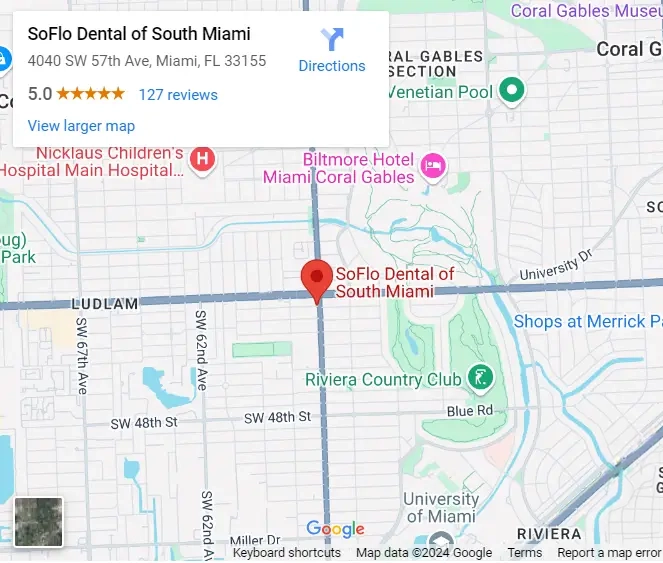
4040 SW 57th Ave, Miami, FL 33155
Working Hours
Mon: 9:00 a.m. – 5:00 p.m.
Tue: 9:00 a.m. – 5:00 p.m.
Wed: 8:30 a.m. – 8:00 p.m.
Thu: 9:00 a.m. – 5:00 p.m.
Fri: 9:00 a.m. – 5:00 p.m.
Sat: By Appointment Only
Sun: Closed

Welcome to SoFlo Dentistry, we provide exceptional dental care tailored to your needs. For appointments or inquiries.


