
How Much Does Emergency Dental Care Cost in Miami With and Without Insurance?

When a severe toothache, broken tooth, swelling, or dental injury happens unexpectedly, one of the first questions many patients have is, "How much will emergency dental care cost?" The answer can vary significantly depending on the cause of the dental emergency, the treatment required, whether diagnostic imaging is needed, and whether you have dental insurance.
Emergency dental care does not have one fixed price. A simple examination for tooth pain may cost less than treatment for a dental infection, while procedures such as root canal therapy, tooth extraction, or a dental crown can involve additional costs.
At SoFlo Dental of Kendall Miami and SoFlo Dental of South Miami, we provide emergency dental care to evaluate urgent dental problems and determine the appropriate treatment. Understanding what can affect emergency dental costs can help you make informed decisions when unexpected dental pain or injury occurs.
Why Emergency Dental Costs Can Vary
There is no single price for emergency dental care because every dental emergency is different. The total cost depends primarily on the condition being treated and the procedures needed to address it.
Factors that may affect the cost include:
- The type and severity of the dental problem
- Whether dental X-rays or other diagnostic procedures are required
- The treatment necessary to resolve the problem
- Whether the tooth can be preserved
- The materials used for restorative treatment
- The complexity of the procedure
- Whether you have dental insurance
- Your specific insurance benefits and deductible
For example, treating a small cavity may involve a different level of care than treating a severely infected tooth. A dental examination is often the first step toward determining what treatment is actually needed.
How Much Does Emergency Dental Care Cost Without Insurance?
Patients without dental insurance are generally responsible for the full cost of their examination, diagnostic services, and treatment. However, the amount varies depending on the services required.
An emergency dental visit may involve:
- An emergency examination
- Dental X-rays
- Treatment for tooth decay
- A dental filling
- Treatment for a dental infection
- Root canal therapy
- Tooth extraction
- A temporary or permanent restoration
- Other restorative or emergency procedures
A patient with a minor dental issue may require only an examination and straightforward treatment, while someone with a severe infection or damaged tooth may require more extensive care.
Because treatment needs differ from patient to patient, the most reliable way to understand your potential cost is to have the dental problem evaluated and discuss the recommended treatment with your dental team.
How Much Does Emergency Dental Care Cost With Insurance?
Dental insurance may help reduce your out-of-pocket expenses, but coverage varies between insurance plans.
Depending on your plan, insurance may contribute toward certain services such as:
- Emergency examinations
- Dental X-rays
- Fillings
- Tooth extractions
- Root canal treatment
- Crowns
- Other covered dental procedures
Your actual out-of-pocket cost may depend on factors such as your deductible, copayment, coinsurance, annual maximum, waiting periods, and whether the dentist or procedure is covered under your specific plan.
It is important to remember that having dental insurance does not necessarily mean that every emergency procedure will be fully covered.
Before treatment, ask your dental office about insurance verification and estimated patient responsibility when possible.
What Does an Emergency Dental Examination Include?
The first step in treating a dental emergency is determining what is causing the problem.
Depending on your symptoms, your dentist may:
- Review your dental and medical history
- Ask when the pain or injury began
- Examine your teeth and gums
- Check for swelling or signs of infection
- Evaluate damaged or broken teeth
- Take dental X-rays when necessary
- Assess the tooth's response to pressure or temperature
This evaluation helps your dentist determine whether you need immediate treatment and what type of care may be appropriate.
The examination itself does not necessarily determine the total cost of your emergency visit because additional treatment may be recommended after the cause of the problem is identified.
Common Emergency Dental Treatments and Their Costs
The cost of emergency dental care depends heavily on the treatment required. Some of the most common procedures include:
Dental Fillings
If your emergency is caused by a cavity that has not progressed too deeply, your dentist may be able to remove the decay and restore the tooth with a filling.
The cost can vary depending on:
- The size of the cavity
- The location of the tooth
- The type of filling material
- Your insurance coverage
Root Canal Therapy
If decay or damage reaches the pulp inside the tooth and causes significant inflammation or infection, root canal therapy may be recommended.
The overall cost can depend on:
- Which tooth requires treatment
- The complexity of the root canals
- Whether additional restorative treatment is required
- Your insurance benefits
A dental crown may also be recommended after root canal treatment to help restore and protect the tooth.
Tooth Extraction
If a severely damaged or infected tooth cannot be predictably restored, extraction may be recommended.
The cost may vary depending on whether the extraction is straightforward or requires a more complex surgical approach.
Your dentist can explain the procedure and discuss tooth replacement options when appropriate.
Treatment for a Dental Abscess
A dental abscess requires prompt professional evaluation. Treatment may involve addressing the source of infection, draining an abscess when appropriate, performing root canal treatment, or extracting a tooth that cannot be saved.
Antibiotics may sometimes be prescribed when clinically appropriate, but antibiotics alone do not eliminate the underlying source of most dental infections.
Dental Crowns
A crown may be needed when a tooth has significant structural damage or after certain root canal treatments.
The total cost can depend on the tooth being treated, the type of crown selected, laboratory or fabrication requirements, and insurance coverage.
Does Dental Insurance Cover Emergency Visits?
Many dental insurance plans provide some level of coverage for emergency dental services, but the specific benefits differ between plans.
Coverage may depend on:
- Your insurance provider
- Your individual plan
- Whether the dental office is in-network
- Your remaining annual maximum
- Your deductible
- The specific procedure performed
- Whether the treatment is considered a covered benefit
For this reason, it is important not to assume that an emergency visit or treatment will be completely covered.
If you have insurance, bring your insurance information to your appointment and ask the dental office to review your available benefits when possible.
What If You Don't Have Dental Insurance?
Not having dental insurance should not necessarily mean ignoring severe dental pain or an urgent dental problem.
Delaying treatment can allow some dental conditions to become more complicated. A problem that initially requires relatively straightforward care may require more extensive treatment if it progresses.
If you do not have insurance, ask your dental office:
- What is the cost of the initial examination?
- Are X-rays included or billed separately?
- What treatment is recommended?
- What is the estimated total cost?
- What portion is due at the appointment?
- Are payment options available?
- Are there financing options for eligible patients?
Knowing the expected costs before proceeding with treatment can make emergency dental care easier to plan for.
What Should You Ask About Emergency Dental Costs?
If you are worried about unexpected dental expenses, don't hesitate to ask questions before treatment.
Useful questions include:
- What is causing my dental problem?
- What treatment do I need?
- Is treatment needed immediately?
- What will the examination and X-rays cost?
- What is the estimated cost of treatment?
- Does my insurance cover this procedure?
- What will my estimated out-of-pocket cost be?
- Are there alternative treatment options?
- What happens if I delay treatment?
A clear discussion with your dental team can help you understand both the clinical recommendation and the financial considerations involved.
Should You Delay Emergency Dental Treatment Because of Cost?
Cost is an important consideration, but delaying necessary dental care can sometimes allow a problem to become more complicated.
For example, untreated decay can progress deeper into the tooth, while a dental infection can spread into surrounding tissues. A damaged tooth may also become more difficult to restore if treatment is delayed.
If you are experiencing severe pain, swelling, fever, dental trauma, or other concerning symptoms, contact a dentist promptly to determine the appropriate next step.
If you have difficulty breathing or swallowing, significant facial swelling, or other signs of a potentially serious infection, seek immediate medical attention.
How to Reduce Unexpected Dental Costs
Although dental emergencies cannot always be prevented, regular preventive care can help identify problems before they become urgent.
You can help protect your oral health by:
- Brushing twice daily with fluoride toothpaste
- Flossing every day
- Visiting your dentist for regular examinations
- Treating cavities before they become more extensive
- Wearing a mouthguard during contact sports
- Avoiding chewing ice and other hard objects
- Addressing persistent tooth sensitivity or pain promptly
Regular dental care may help reduce the likelihood of needing extensive emergency treatment.
Emergency Dental Care at SoFlo Dental
At SoFlo Dental of Kendall Miami and SoFlo Dental of South Miami, we understand that dental emergencies can be stressful, especially when you are also concerned about the cost of treatment.
Our team provides emergency dental care to evaluate urgent dental concerns, identify the cause of your symptoms, and determine an appropriate treatment plan.
Because every dental emergency is different, the cost of care depends on your specific condition and the treatment required. Our team can discuss your recommended treatment and help you understand the expected costs and insurance considerations.
Whether you are experiencing severe tooth pain, a broken tooth, swelling, or another urgent dental concern, prompt evaluation can help prevent the problem from becoming more complicated.
Need Emergency Dental Care in Miami?
If you are experiencing severe tooth pain, swelling, a broken tooth, or another urgent dental concern, don't wait for the problem to worsen. Contact SoFlo Dental to schedule an emergency evaluation and discuss your treatment options and expected costs.
Frequently Asked Questions on Emergency Dental Care Cost
Q: How much does an emergency dental visit cost in Miami without insurance?
A: There is no single cost for an emergency dental visit because the total depends on the examination, diagnostic imaging, and treatment required. A straightforward dental problem may require less treatment than an infection, severely damaged tooth, or other complex condition. The dental office can provide an estimate after evaluating your specific problem.
Q: Does dental insurance cover emergency dental treatment?
A: Many dental insurance plans provide coverage for certain emergency examinations, diagnostic services, and treatments, but benefits vary by plan. Your deductible, annual maximum, coinsurance, network status, and the specific procedure can all affect your out-of-pocket cost. Contact your dental office and insurance provider to confirm your benefits.
Q: Is emergency dental care more expensive than a regular dental visit?
A: Emergency dental care can involve additional diagnostic procedures or treatment because the dentist is addressing an urgent problem. However, the cost depends on the condition being treated rather than simply whether the appointment is considered an emergency. A dental examination is the best way to determine what care is needed.
Q: Can I get emergency dental care without insurance?
A: Yes. Patients without dental insurance can still seek emergency dental care and pay for the services themselves. Ask the dental office about examination costs, treatment estimates, payment options, and available financing before proceeding when possible.
Q: Should I wait until I have insurance before treating a dental emergency?
A: Delaying necessary treatment may allow some dental problems to worsen and potentially require more extensive care. If you have severe tooth pain, facial swelling, fever, or another urgent dental concern, it is important to have the problem evaluated promptly rather than waiting for symptoms to resolve on their own.
SCHEDULE YOUR VISIT!
For appointments or inquiries.
*Your Full Name
*Location
*Your Email
*Your phone number
*Message body
I allow this website to store my submission so they can respond to my inquiry.
OUR TWO LOCATIONS
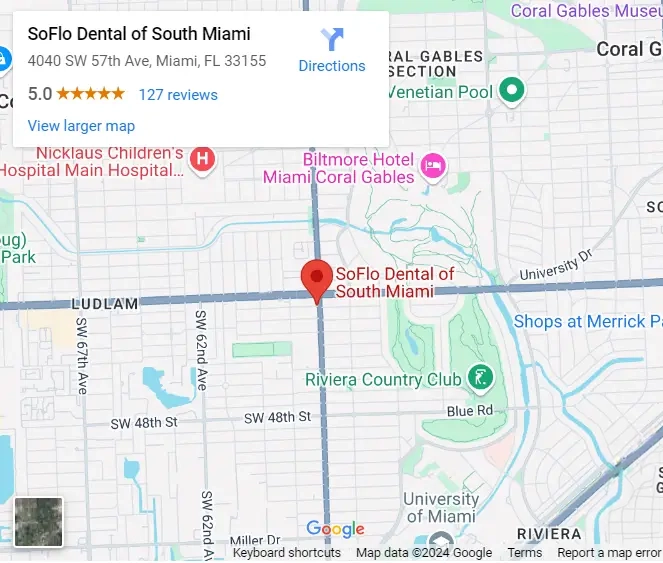
Kendall Miami & South Miami
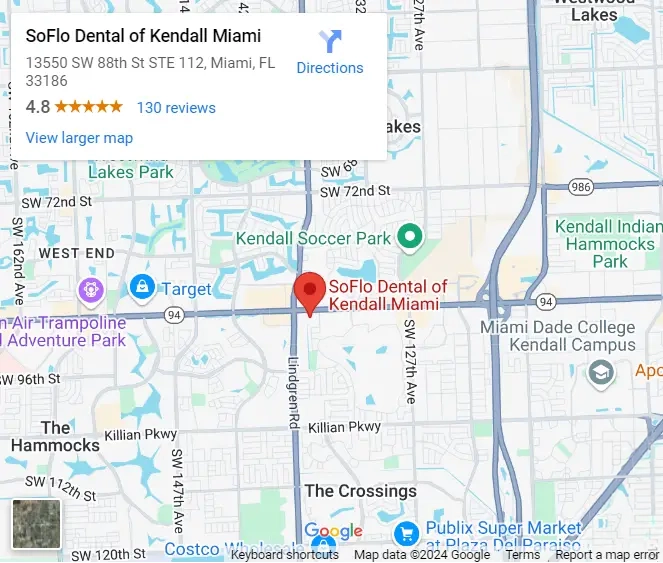
13550 SW. 88th St., Unit #112, Miami, FL 33186
Working Hours
Mon: 11:30 a.m. – 8:00 p.m.
Tue: 9:00 a.m. – 5:00 p.m.
Wed: 11:30 a.m. – 8:00 p.m.
Thu: 9:00 a.m. – 4:30 p.m.
Fri: 9:00 a.m. – 4:30 p.m.
Sat: By Appointment Only
Sun: Closed
4040 SW 57th Ave, Miami, FL 33155
Working Hours
Mon: 9:00 a.m. – 5:00 p.m.
Tue: 9:00 a.m. – 5:00 p.m.
Wed: 8:30 a.m. – 8:00 p.m.
Thu: 9:00 a.m. – 5:00 p.m.
Fri: 9:00 a.m. – 5:00 p.m.
Sat: By Appointment Only
Sun: Closed

Welcome to SoFlo Dentistry, we provide exceptional dental care tailored to your needs. For appointments or inquiries.


