
Does Invisalign Work Faster Than Traditional Braces?
If you are considering orthodontic treatment, one of the first questions that may come to mind is, “Does Invisalign work faster than traditional braces?” Whether you want to straighten crooked teeth, close gaps, or improve your bite, understanding treatment timelines can help you choose the option that best fits your needs.
Both Invisalign and traditional braces are highly effective orthodontic treatments, but the time required to achieve results can vary depending on the complexity of your case, your commitment to treatment, and your specific smile goals.
At SoFlo Dental of Kendall Miami and SoFlo Dental of South Miami, we help patients explore their orthodontic options and create personalized treatment plans designed to achieve healthy, beautiful smiles as efficiently as possible.
Understanding Invisalign and Traditional Braces
Before comparing treatment times, it is important to understand how each system works.
Invisalign
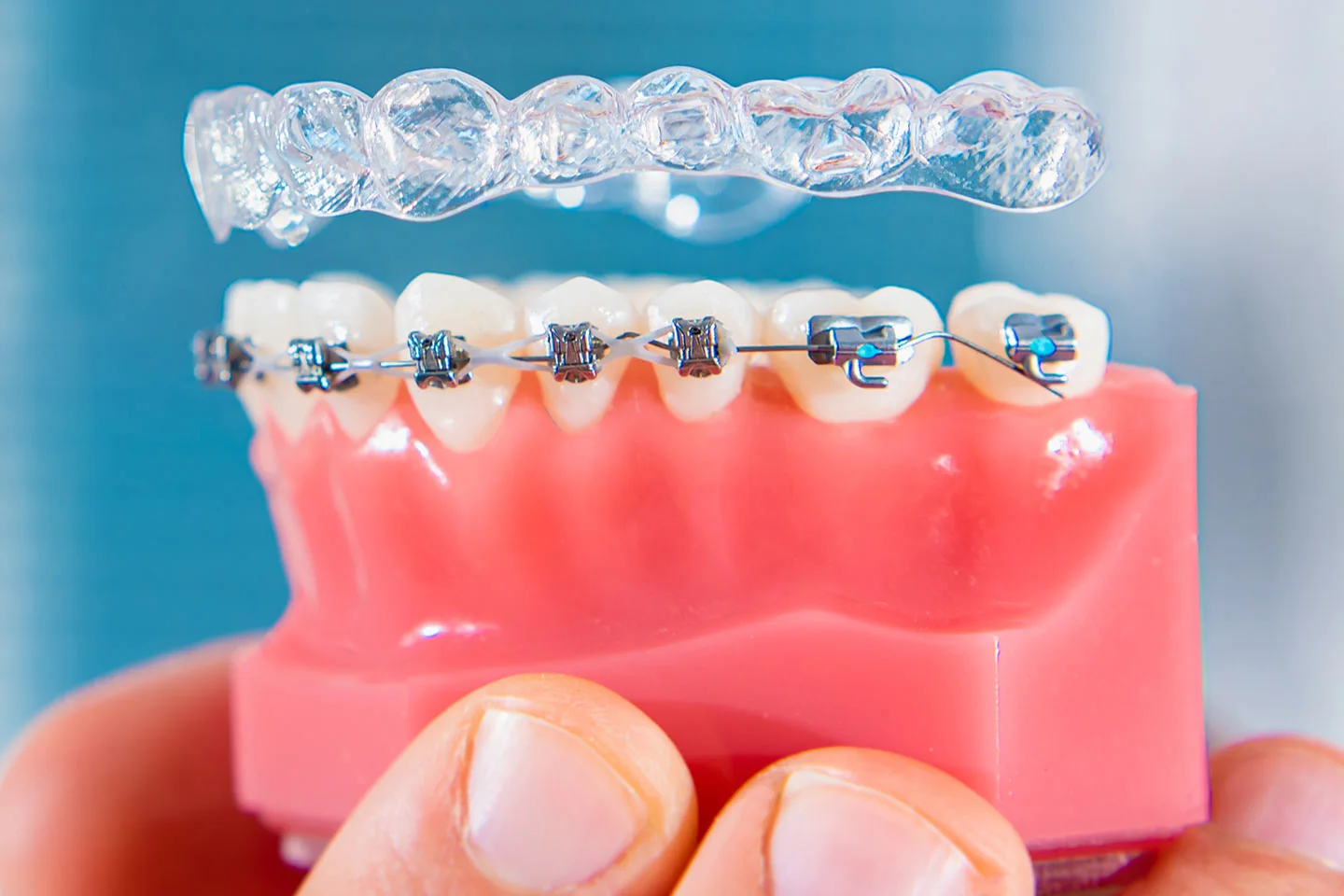
Invisalign uses a series of custom-made clear aligners that gradually move teeth into their desired positions. Patients switch to a new set of aligners every one to two weeks, following a carefully planned treatment sequence. The aligners are nearly invisible, removable for meals and oral hygiene, custom-designed digitally, and comfortable to wear with smooth plastic edges.
Traditional Braces
Traditional braces use metal or ceramic brackets permanently attached to the teeth and connected by archwires. Periodic adjustments are made to apply pressure and guide tooth movement throughout treatment. Braces remain fixed permanently until treatment ends, making them highly effective for severe structural issues while requiring zero daily patient compliance.
Is Invisalign Faster Than Braces?
The answer depends entirely on the individual case. For many patients with mild to moderate orthodontic issues, Invisalign can offer treatment times that are similar to or sometimes shorter than traditional braces. However, for more complex structural orthodontic problems, braces may still provide the most efficient treatment path.
In general, mild cases involving minor crowding or spacing can take anywhere from 6 to 12 months with Invisalign. Moderate cases often require 12 to 18 months of clear aligner wear. In contrast, traditional braces frequently require a commitment of 18 to 24 months, though timelines vary significantly based on individual needs. The key factor is not the appliance itself, but the type and severity of the orthodontic problem being treated.
Factors That Influence Treatment Speed
Severity of Misalignment
Patients with minor crowding or spacing issues often complete Invisalign treatment relatively quickly. Conditions that generally require longer treatment timelines include severe crowding, deep overbites, underbites, crossbites, complex tooth rotations, or large spacing issues across multiple teeth.
Patient Compliance Matters
One major difference between Invisalign and braces is patient responsibility. Because braces are fixed, they work continuously. Invisalign, however, requires self-discipline. For Invisalign to work effectively, aligners must be worn 20 to 22 hours per day, every single day. Removing aligners too often can delay progress and extend treatment time.
Advanced Diagnostic Technology
Modern Invisalign systems use advanced digital software to map tooth movement with extreme precision. This allows dentists to customize aligner sequences and optimize structural shifts efficiently. These technological improvements have helped substantially reduce treatment times for many clear aligner patients.
When Invisalign May Be Faster?
Invisalign often holds the speed advantage in cases involving:
- Mild Crowding: Small alignment issues respond very well to clear aligners.
- Minor Gaps: Closing small spaces between teeth can frequently be accomplished efficiently.
- Orthodontic Relapse: Adults whose teeth have shifted after previous childhood braces often see rapid improvements.
- Cosmetic Adjustments: Patients seeking primarily aesthetic improvements in the front "smile zone" may complete treatment sooner than those requiring major jaw or bite corrections.
When Braces May Be Faster?
Traditional orthodontic brackets may provide a more efficient solution for:
- Severe Crowding: Complex crowding sometimes requires tooth extractions or severe bodily movements that are easier to control with fixed brackets.
- Significant Bite Corrections: Certain severe overbites or underbites respond more predictably to traditional orthodontic mechanics and elastics.
- Impacted Teeth: Cases involving impacted or unerupted teeth often require surgical exposure and braces to pull the tooth into alignment.
- Compliance Concerns: If a patient is prone to forgetting or losing their aligners, braces ensure the treatment stays on schedule continuously.
Which Option Produces Visual Results Faster?
Many Invisalign patients notice visible aesthetic improvements within just a few months. Because the aligners are completely clear, you get a front-row seat to your teeth moving into place without metal brackets blocking the view.
Note: Early visible improvements are encouraging, but they do not necessarily mean the entire treatment will finish sooner. Final treatment duration depends on achieving complete root alignment and full bite correction.
Appointment Convenience and Experience
While it may not change the physical speed of tooth movement, Invisalign follow-up visits are often less frequent and much shorter than traditional orthodontic adjustment appointments.
Choosing Invisalign clear aligners also means fewer emergency visits since there are no broken wires or loose brackets to poke your cheeks. It also allows for easier oral hygiene maintenance since you remove them to brush and floss, and provides a more comfortable, smooth fit against your lips and gums.
Tips to Help Invisalign Work as Quickly as Possible
If you choose Invisalign, establishing these daily habits can help keep your treatment timeline perfectly on schedule:
- Wear Aligners as Directed: Strictly hit the 20 to 22 hours of daily wear goal.
- Change Aligners on Schedule: Follow your dentist's instructions regarding when to progress to the next tray.
- Attend All Appointments: Regular monitoring allows your dentist to ensure treatment is tracking correctly.
- Maintain Excellent Oral Hygiene: Healthy teeth move more predictably. Always brush before reinserting trays.
- Store Aligners Safely: Lost or damaged aligners require re-ordering, which can significantly delay your final results.
The Best Treatment Is the One That Fits Your Needs
So, does Invisalign work faster than traditional braces? In many mild to moderate cases, Invisalign can achieve results in a comparable or even shorter timeframe than braces. However, treatment speed ultimately depends on your specific orthodontic needs and your commitment to wearing your aligners consistently.
At SoFlo Dental, we create customized clear aligner treatment plans designed to help patients achieve straighter smiles as efficiently as possible. Whether you need to see a dentist in Kendall or want to visit our South Miami location, our team is here to help you find the absolute best option for your lifestyle and goals.
Frequently Asked Questions
Q: Is Invisalign faster than braces?
A: For many mild to moderate orthodontic cases, Invisalign can provide results in a similar or sometimes shorter timeframe than traditional braces. Treatment length depends entirely on the complexity of the alignment issue.
Q: How long does Invisalign treatment usually take?
A: Many Invisalign treatments are completed within 6 to 18 months, though individual timelines vary depending on how much the teeth need to move.
Q: How long do traditional braces take?
A: Traditional braces commonly require 18 to 24 months of treatment, though timelines vary based on age, bone density, and case severity.
Q: Can Invisalign fix severe orthodontic problems?
A: Invisalign can treat many complex cases today due to advanced technology, but some severe jaw or structural bite issues are still best addressed with traditional braces.
Q: What happens if I do not wear my Invisalign aligners enough?
A: Not wearing aligners for the recommended 20 to 22 hours per day will cause your teeth to lag behind the program, delaying your progress and extending your overall treatment time.
Q: How can I make my Invisalign treatment go faster?
A: The best way to stay on track is strict consistency: wear aligners continuously, change them precisely on schedule, maintain excellent oral hygiene, and never miss your checkups.
Ready for a Personalized Timeline?
Schedule a consultation with SoFlo Dental of Kendall Miami or SoFlo Dental of South Miami to learn whether Invisalign is the right choice for your smile and to get an accurate estimate of your custom treatment timeline.
SCHEDULE YOUR VISIT!
For appointments or inquiries.
*Your Full Name
*Location
*Your Email
*Your phone number
*Message body
I allow this website to store my submission so they can respond to my inquiry.
OUR TWO LOCATIONS
Kendall Miami & South Miami
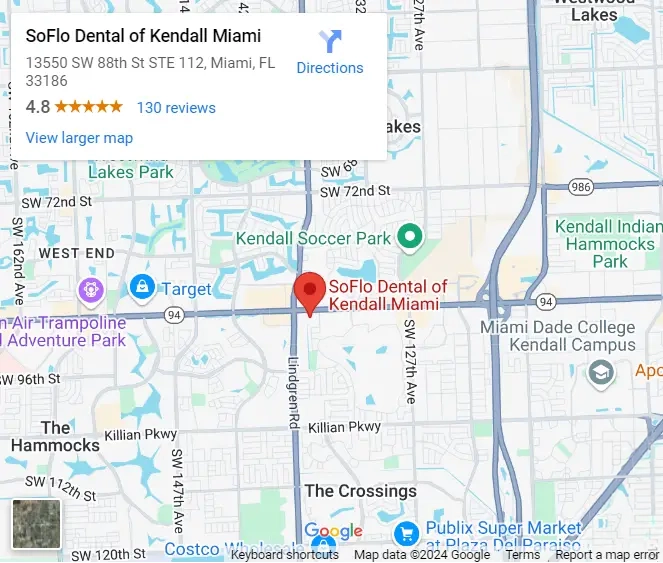
13550 SW. 88th St., Unit #112, Miami, FL 33186
Working Hours
Mon: 11:30 a.m. – 8:00 p.m.
Tue: 9:00 a.m. – 5:00 p.m.
Wed: 11:30 a.m. – 8:00 p.m.
Thu: 9:00 a.m. – 4:30 p.m.
Fri: 9:00 a.m. – 4:30 p.m.
Sat: By Appointment Only
Sun: Closed
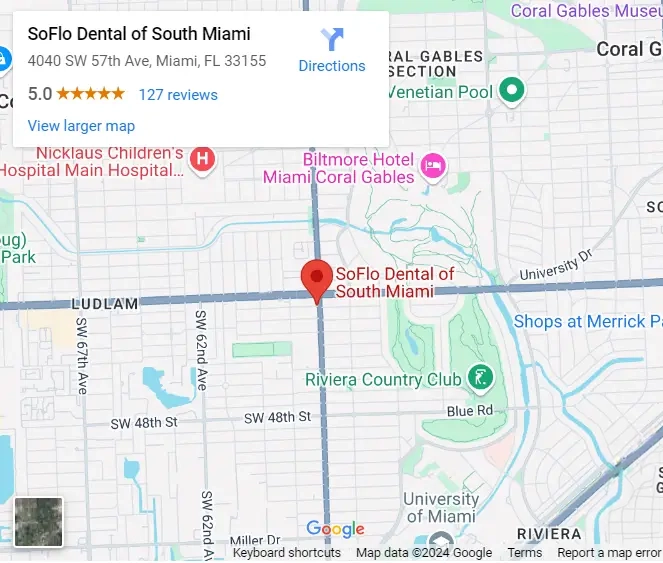
4040 SW 57th Ave, Miami, FL 33155
Working Hours
Mon: 9:00 a.m. – 5:00 p.m.
Tue: 9:00 a.m. – 5:00 p.m.
Wed: 8:30 a.m. – 8:00 p.m.
Thu: 9:00 a.m. – 5:00 p.m.
Fri: 9:00 a.m. – 5:00 p.m.
Sat: By Appointment Only
Sun: Closed

Welcome to SoFlo Dentistry, we provide exceptional dental care tailored to your needs. For appointments or inquiries.


