
Why Is a Severe Toothache a Dental Emergency and Not Just Pain?

A toothache is often dismissed as something that will go away on its own, especially if over-the-counter pain relievers provide temporary relief. However, a severe toothache is much more than a simple inconvenience. Intense or persistent tooth pain is often your body's way of warning you that something is seriously wrong. Whether the pain is caused by an infection, an abscess, severe decay, or dental trauma, delaying treatment can allow the problem to worsen and may even affect your overall health.
At SoFlo Dental of Kendall Miami and SoFlo Dental of South Miami, we provide prompt emergency dental care to diagnose the cause of severe tooth pain and provide treatment before complications develop. Understanding why a severe toothache is considered a dental emergency can help you know when to seek immediate care.
Why Severe Tooth Pain Should Never Be Ignored
Pain is your body's natural warning system. A severe toothache usually indicates that the nerve inside the tooth or the surrounding tissues have become inflamed, infected, or damaged. Unlike a mild sensitivity that may come and go, intense tooth pain often signals a condition that requires professional treatment.
Ignoring the pain may lead to:
- Worsening infection
- Permanent damage to the tooth
- Spread of infection to surrounding tissues
- Difficulty eating and sleeping
- Increased risk of tooth loss
Early treatment often prevents more extensive procedures and helps preserve your natural tooth.
Common Causes of a Severe Toothache
Several dental conditions can cause intense tooth pain. A dental examination and X-rays help determine the exact cause.
Deep Tooth Decay
Untreated cavities gradually penetrate deeper into the tooth until they reach the inner pulp, where the nerves and blood vessels are located. Once the pulp becomes inflamed or infected, significant pain often develops.
Symptoms may include:
- Constant aching
- Pain when chewing
- Sensitivity to hot or cold
- Lingering discomfort after eating
Dental Abscess
A dental abscess is one of the most serious causes of tooth pain. It occurs when bacteria create a pocket of infection around the root of the tooth or within the gums.
Common symptoms include:
- Severe throbbing pain
- Swelling of the gums or face
- Bad taste or drainage in the mouth
- Fever
- Swollen lymph nodes
An untreated abscess can spread beyond the mouth and become a serious medical condition.
Cracked or Fractured Tooth
Sometimes a tooth develops a crack that is not immediately visible. Chewing forces or temperature changes can expose the nerve, causing sharp pain.
Pain often occurs when:
- Biting down
- Releasing pressure after chewing
- Drinking hot or cold beverages
Prompt treatment helps prevent the crack from worsening.
Advanced Gum Disease
Severe periodontal disease can expose tooth roots, damage supporting bone, and lead to painful infections around the teeth.
You may notice:
- Swollen or bleeding gums
- Loose teeth
- Pain while chewing
- Persistent bad breath
Impacted Wisdom Teeth
Wisdom teeth that cannot fully erupt may become trapped beneath the gums, creating pressure, inflammation, and infection.
Symptoms often include:
- Pain in the back of the mouth
- Jaw soreness
- Swelling
- Difficulty opening the mouth
When a Toothache Becomes a Dental Emergency
Not every toothache requires immediate treatment, but certain symptoms indicate you should contact an emergency dentist right away.
Seek emergency dental care if you experience:
- Severe or unbearable tooth pain
- Swelling of the face or jaw
- Fever along with tooth pain
- Pus or drainage around the tooth
- Difficulty swallowing or breathing
- A cracked or broken tooth causing severe pain
- Pain following dental trauma
- Tooth pain that keeps you awake at night
These symptoms often indicate an infection or other condition requiring urgent treatment.
What You Should Do While Waiting to See a Dentist
Although home remedies cannot treat the underlying problem, they may help manage discomfort until your appointment.
You can:
- Rinse your mouth with warm salt water.
- Brush and floss gently to remove trapped food.
- Apply a cold compress to reduce swelling.
- Take over-the-counter pain medication as directed.
- Eat soft foods until your appointment.
Avoid:
- Placing aspirin directly on the gums
- Applying heat to swollen areas
- Ignoring increasing pain
- Delaying treatment because the pain temporarily improves
Important Note: Pain that disappears suddenly may actually indicate that the nerve inside the tooth has died, while the infection continues to spread.
How Dentists Diagnose Severe Tooth Pain
During your emergency visit, your dentist will carefully evaluate the affected tooth and surrounding tissues using state-of-the-art dental technology.
Your examination may include:
- Reviewing your symptoms
- Clinical examination
- Digital X-rays
- Bite assessment
- Testing the tooth's response to temperature or pressure
Identifying the exact cause allows your dentist to recommend the most appropriate treatment.
Treatment Options for Severe Toothaches
Treatment depends on the underlying cause of your pain. Your dentist may recommend options available through our general dentistry services:
- Dental Filling: If decay is detected early, removing the cavity and placing a filling can eliminate the pain.
- Root Canal Therapy: If the pulp inside the tooth has become infected, root canal treatment removes the infection while preserving the natural tooth.
- Dental Crown: A crown may restore strength to a cracked or weakened tooth after treatment.
- Drainage of an Abscess: If an abscess is present, your dentist may drain the infection and prescribe antibiotics when necessary.
- Painless Tooth Extraction: If the tooth cannot be saved, extraction may be the healthiest option to prevent further infection. Your dentist can discuss replacement options such as dental implants or bridges.
What Happens If You Ignore a Severe Toothache?
Many people hope severe tooth pain will simply disappear. Unfortunately, the underlying problem rarely resolves without professional care.
Delaying treatment may result in:
- Larger cavities
- Extensive infections
- Bone loss
- Spread of infection into the jaw or facial tissues
- Tooth loss
- More complex and expensive treatment
Seeking prompt care often leads to better outcomes and helps preserve your oral health.
Preventing Severe Toothaches
Many dental emergencies can be prevented with regular preventive care.
Protect your smile by:
- Brushing twice daily with fluoride toothpaste
- Flossing every day
- Visiting your dentist for regular examinations and cleanings
- Treating cavities early
- Wearing a mouthguard during sports
- Avoiding chewing ice or hard objects
Routine dental visits allow small problems to be treated before they become painful emergencies.
Emergency Dental Care at SoFlo Dental
At SoFlo Dental of Kendall Miami and SoFlo Dental of South Miami, we understand that severe tooth pain can interfere with every aspect of your daily life. Our experienced team provides prompt emergency dental care to identify the source of your pain and deliver effective treatment as quickly as possible.
Whether your toothache is caused by an infection, a cracked tooth, advanced decay, or another dental emergency, we are committed to helping you find relief while protecting your long-term oral health. If you are experiencing severe tooth pain, don't wait for it to become worse. Contact our office immediately for an emergency evaluation.
Need Emergency Dental Care?
If you have severe tooth pain, facial swelling, or signs of a dental infection, book an appointment with SoFlo Dental as soon as possible. Prompt treatment can relieve pain, prevent complications, and help save your natural tooth whenever possible.
Frequently Asked Questions
Q: When is a toothache considered a dental emergency?
A: A toothache becomes a dental emergency when it is severe, persistent, accompanied by swelling, fever, pus, difficulty swallowing, or follows dental trauma. These symptoms may indicate an infection that requires immediate treatment.
Q: Can a severe toothache go away on its own?
A: While the pain may temporarily improve, the underlying problem usually remains. Conditions such as infections or deep decay typically worsen without professional treatment.
Q: Should I go to the emergency room for a severe toothache?
A: Most toothaches should be treated by an emergency dentist. However, if you have difficulty breathing, difficulty swallowing, severe facial swelling, or a high fever, seek immediate medical attention at the nearest emergency room.
Q: What can I do to relieve a severe toothache before my appointment?
A: Rinse with warm salt water, take over-the-counter pain medication as directed, apply a cold compress if swelling is present, and avoid chewing on the affected side until you can see your dentist.
Q: Can a tooth infection spread to other parts of the body?
A: Yes. An untreated dental infection can spread to surrounding tissues and, in rare cases, other areas of the body. This is one of the main reasons severe tooth pain should never be ignored.
SCHEDULE YOUR VISIT!
For appointments or inquiries.
*Your Full Name
*Location
*Your Email
*Your phone number
*Message body
I allow this website to store my submission so they can respond to my inquiry.
OUR TWO LOCATIONS
Kendall Miami & South Miami

13550 SW. 88th St., Unit #112, Miami, FL 33186
Working Hours
Mon: 11:30 a.m. – 8:00 p.m.
Tue: 9:00 a.m. – 5:00 p.m.
Wed: 11:30 a.m. – 8:00 p.m.
Thu: 9:00 a.m. – 4:30 p.m.
Fri: 9:00 a.m. – 4:30 p.m.
Sat: By Appointment Only
Sun: Closed
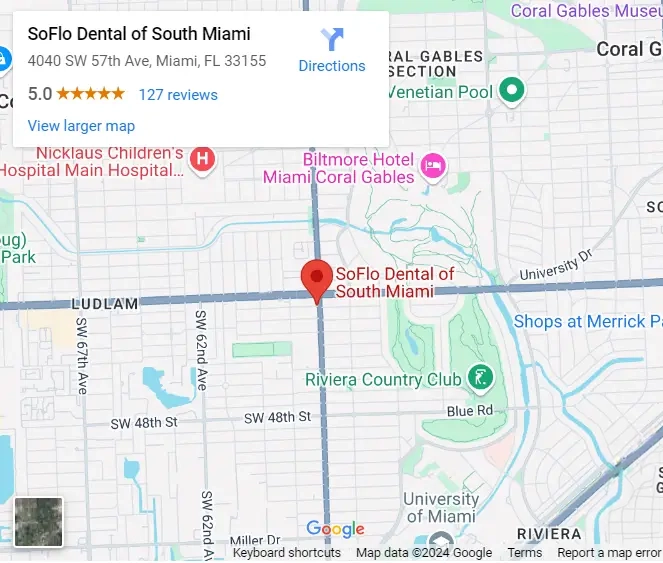
4040 SW 57th Ave, Miami, FL 33155
Working Hours
Mon: 9:00 a.m. – 5:00 p.m.
Tue: 9:00 a.m. – 5:00 p.m.
Wed: 8:30 a.m. – 8:00 p.m.
Thu: 9:00 a.m. – 5:00 p.m.
Fri: 9:00 a.m. – 5:00 p.m.
Sat: By Appointment Only
Sun: Closed

Welcome to SoFlo Dentistry, we provide exceptional dental care tailored to your needs. For appointments or inquiries.


