
Understanding TMJ Disorders and How Dental Care Can Help (TMJ Disorder Treatment Guide)

If you’ve ever felt a click in your jaw, unexplained headaches, or pain while chewing, you might be dealing with a TMJ disorder. As someone who has worked closely with dental practices for over a decade, I’ve seen many patients ignore early symptoms—only to end up with chronic pain that affects sleep, eating, and even mental health.
The good news? TMJ disorder treatment is highly effective when diagnosed early and managed properly.
What Is TMJ Disorder?
Temporomandibular disorders (TMD) are conditions affecting the temporomandibular joint (TMJ), the hinge connecting your jaw to your skull.
Think of it like a sliding door hinge. When it works smoothly, you don’t notice it. But when it’s misaligned or strained, every movement becomes painful and noisy.
Common Symptoms You Shouldn’t Ignore
Many people search things like “why does my jaw lock when I open it?” or “TMJ causing headaches and ear pain”—and for good reason.
Key Signs of TMJ Disorders:
- Jaw pain or tenderness
- Clicking, popping, or grinding sounds
- Jaw locking (open or closed)
- Frequent headaches or migraines
- Ear pain or ringing (without infection)
- Difficulty chewing or uneven bite
If you’re experiencing more than one of these, it’s time to consider professional jaw pain treatment or consult a specialist in general dentistry services.
What Causes TMJ Disorders?
TMJ issues don’t usually come from one single cause—they’re often a combination of factors.
Most Common Causes:
- Teeth grinding (bruxism) – often stress-related (learn why night guards are essential)
- Jaw misalignment (malocclusion)
- Injury or trauma to the jaw
- Arthritis in the joint
- Chronic stress leading to muscle tension
According to the National Institute of Dental and Craniofacial Research (NIDCR), stress and bruxism are among the leading contributors to TMD.
TMJ Disorder Treatment Options (What Actually Works)
When it comes to TMJ therapy options, there’s no one-size-fits-all solution. The best treatment depends on the severity and root cause.
1. Conservative (At-Home) Treatments
These are often the first step, especially for mild cases.
How to fix TMJ pain naturally:
- Apply warm or cold compresses
- Practice jaw relaxation exercises
- Avoid hard or chewy foods
- Reduce stress (meditation, breathing exercises)
- Maintain good posture (especially if you work on a computer)
These methods can provide temporary TMJ pain relief, but may not fix underlying issues.
2. Dental Treatments by a TMJ Dentist
If symptoms persist, a TMJ dentist can offer targeted solutions.
Common Professional Treatments:
- Custom night guards or splints
→ Prevent grinding and reduce joint stress - Bite correction (occlusal adjustment)
→ Aligns teeth for smoother jaw movement - Physical therapy for jaw muscles
→ Improves mobility and reduces stiffness - Medication (short-term use)
→ Anti-inflammatory drugs or muscle relaxants
Advanced diagnostics like cone beam imaging or digital X-rays in modern dentistry may be used for accurate evaluation.
3. Advanced TMJ Therapy Options
For chronic or severe TMD cases:
- Botox for TMJ – Relaxes overactive jaw muscles
- Orthodontic treatment – Corrects bite alignment long-term
- Surgical intervention (rare) – Only in extreme structural issues
Expert Insight: Surgery is rarely the first recommendation. Most patients improve significantly with non-invasive TMD treatment.
Best Treatment for Jaw Clicking & Locking
If your main concern is “jaw clicking” or “jaw locking”, here’s what typically helps:
- Clicking (without pain) → Usually harmless but should be monitored
- Clicking with pain → Requires dental evaluation
- Jaw locking → Often linked to disc displacement and needs treatment
The best treatment for jaw clicking often includes splints + therapy, while locking may need more advanced care.
When Should You See a TMJ Dentist?
Don’t wait until the pain becomes unbearable.
Seek help if:
- Pain lasts more than a week
- Jaw locks or clicks frequently
- You experience chronic headaches
- Eating becomes uncomfortable
Early diagnosis through regular dental visits leads to faster and more affordable TMJ disorder treatment.
Can TMJ Disorders Go Away on Their Own?
Sometimes, mild cases improve with rest and lifestyle changes. But:
- Chronic TMD rarely resolves without treatment
- Ignoring symptoms can lead to worsening pain and joint damage
Think of it like a small crack in a windshield, it only spreads if ignored.
Final Thoughts
TMJ disorder treatment is not just about pain relief, it’s about restoring your quality of life.
From my experience working with dental professionals, patients who act early often avoid invasive treatments and recover faster. If your jaw is sending warning signs, listen to it now, not later.
You can also explore how general dentistry supports overall health for long-term oral wellness.
Frequently Asked Questions
What is the fastest way to relieve TMJ pain?
The fastest relief comes from cold compresses, over-the-counter pain relievers, and jaw rest. However, long-term relief requires proper diagnosis and treatment.
Who should I see for TMJ disorder treatment?
You should consult a TMJ dentist or a dentist trained in TMD treatment, as they specialize in jaw joint disorders and bite alignment.
Why does my jaw lock when I open it?
Jaw locking usually happens due to disc displacement inside the joint, preventing smooth movement. It requires professional evaluation.
Can TMJ cause headaches and ear pain?
Yes, TMJ disorders often cause headaches and ear pain because the jaw joint is located close to ear nerves and muscles.
What is the best treatment for jaw clicking?
If painless, monitoring may be enough. If painful, splints, therapy, and bite correction are the most effective treatments.
Is TMJ treatment permanent?
Some treatments provide long-term relief, especially if the root cause (like bite issues or grinding) is addressed. However, lifestyle factors like stress must also be managed.
How do I fix TMJ pain naturally at home?
You can try:
- Jaw exercises
- Stress reduction
- Soft diet
- Heat/cold therapy
But persistent pain needs professional care.
Is TMJ disorder serious?
It can become serious if untreated, leading to chronic pain, limited jaw movement, and reduced quality of life.
SCHEDULE YOUR VISIT!
For appointments or inquiries.
*Your Full Name
*Location
*Your Email
*Your phone number
*Message body
I allow this website to store my submission so they can respond to my inquiry.
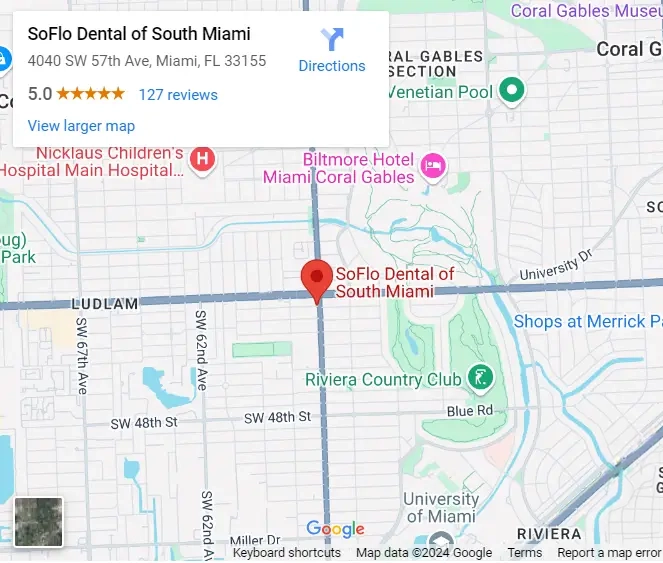
OUR TWO LOCATIONS
Kendall Miami & South Miami
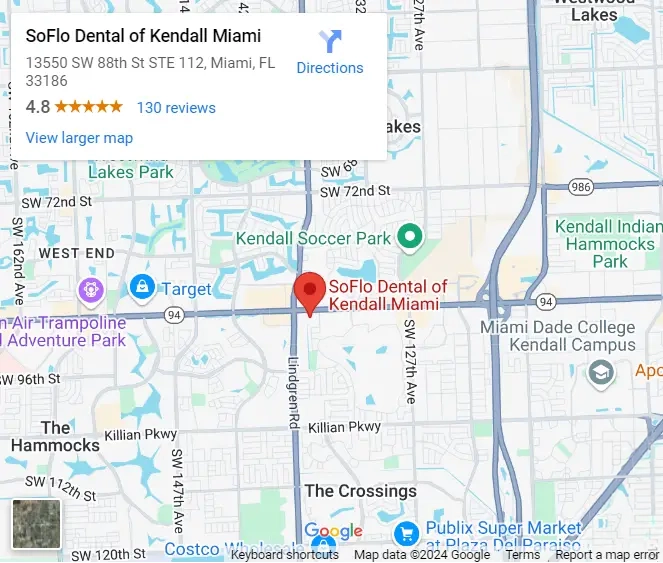
13550 SW. 88th St., Unit #112, Miami, FL 33186
Working Hours
Mon: 11:30 a.m. – 8:00 p.m.
Tue: 9:00 a.m. – 5:00 p.m.
Wed: 11:30 a.m. – 8:00 p.m.
Thu: 9:00 a.m. – 4:30 p.m.
Fri: 9:00 a.m. – 4:30 p.m.
Sat: By Appointment Only
Sun: Closed
4040 SW 57th Ave, Miami, FL 33155
Working Hours
Mon: 9:00 a.m. – 5:00 p.m.
Tue: 9:00 a.m. – 5:00 p.m.
Wed: 8:30 a.m. – 8:00 p.m.
Thu: 9:00 a.m. – 5:00 p.m.
Fri: 9:00 a.m. – 5:00 p.m.
Sat: By Appointment Only
Sun: Closed

Welcome to SoFlo Dentistry, we provide exceptional dental care tailored to your needs. For appointments or inquiries.


