
What Happens When You Call an Emergency Dentist in Kendall, Miami?

A dental emergency can happen without warning, leaving you in pain, anxious, and unsure of what to do next. Whether you have a severe toothache, a broken tooth, a knocked-out tooth, or facial swelling, contacting an emergency dentist as soon as possible is the best first step. Many people hesitate because they don't know what to expect when they make the call, but understanding the process can help you feel more prepared during a stressful situation.
At SoFlo Dental of Kendall Miami and SoFlo Dental of South Miami, we provide prompt emergency dental care for patients experiencing unexpected dental problems. From the moment you contact our office, our goal is to relieve your discomfort, diagnose the problem, and begin treatment as quickly as possible.
Step 1: Calling the Dental Office
When you call our office, a member of our team will ask several questions to better understand your emergency. These questions help us determine how urgently you need to be seen and allow us to prepare for your arrival.
You may be asked:
- What symptoms are you experiencing?
- When did the problem begin?
- Are you in severe pain?
- Is there any swelling or bleeding?
- Was the injury caused by an accident?
- Have you lost or broken a tooth?
- Do you have a fever or difficulty swallowing?
Providing accurate information helps us recommend the appropriate next steps.
Step 2: Receiving Immediate Instructions
Depending on your situation, our team may provide first-aid instructions to help protect your teeth and reduce discomfort before your appointment.
For example, you may be advised to:
- Rinse your mouth with warm salt water.
- Apply a cold compress to reduce swelling.
- Keep a knocked-out tooth moist in milk or saline.
- Control bleeding with clean gauze.
- Avoid chewing on the injured side.
- Take over-the-counter pain medication as directed, if appropriate.
These temporary measures do not replace treatment but can help minimize complications until you reach the office.
Step 3: Scheduling Your Emergency Visit
Dental emergencies are prioritized based on the severity of your condition.
Patients experiencing:
- Severe tooth pain
- Facial swelling
- Dental abscesses
- Knocked-out teeth
- Broken teeth with exposed nerves
- Significant oral bleeding
are typically scheduled as soon as possible. Our team works to accommodate emergency patients promptly whenever possible.
Step 4: Arriving at the Office
When you arrive, our team will help you complete any necessary paperwork if you are a new patient. If your pain is severe, we focus on getting you evaluated quickly.
During your visit, we will review:
- Your symptoms
- Your medical history
- Current medications
- Allergies
- The events leading to your dental emergency
This information helps us plan safe and effective treatment.
Step 5: Emergency Dental Examination
Your dentist will perform a thorough examination to determine the source of the problem using state-of-the-art dental technology.
The evaluation may include:
- A visual examination of your teeth and gums
- Digital X-rays
- Bite evaluation
- Examination of nearby teeth
- Assessment of facial swelling or trauma
Even if only one tooth hurts, surrounding structures may also need evaluation.
Step 6: Identifying the Cause of the Emergency
Emergency dental pain can have many causes. Your dentist will determine whether your symptoms are related to:
- Tooth decay
- A dental abscess
- A cracked tooth
- A broken filling or crown
- Gum infection
- Wisdom tooth complications
- Dental trauma
- A damaged dental restoration
An accurate diagnosis allows treatment to begin immediately whenever possible.
Step 7: Beginning Treatment
Whenever appropriate, treatment is started during the same emergency visit under our comprehensive general dentistry services to relieve pain and stabilize the problem.
Depending on your diagnosis, treatment may include:
- Dental Filling: If a cavity is causing the pain, the decay may be removed and replaced with a filling.
- Root Canal Therapy: If the tooth's pulp has become infected, root canal treatment can remove the infection while preserving the natural tooth.
- Temporary or Permanent Crown: Broken or weakened teeth may require a crown to restore strength and function.
- Repairing a Broken Tooth: Minor fractures may be repaired using tooth-colored bonding or other restorative techniques.
- Draining an Abscess: If an abscess is present, your dentist may drain the infection and prescribe antibiotics when necessary.
- Painless Tooth Extraction: If a tooth cannot be saved, extraction may be recommended to prevent the infection or damage from worsening.
What If Additional Treatment Is Needed?
Some dental emergencies require follow-up care after the initial visit.
Depending on your condition, you may return for:
- Permanent crown placement
- Completion of root canal therapy
- Follow-up examinations
- Tooth replacement options such as dental implants or bridges
- Periodontal treatment
- Monitoring of healing after trauma
Your dentist will explain your treatment plan and answer any questions before you leave.
Should You Wait Until the Pain Gets Worse?
Many people delay calling the dentist because the pain comes and goes. Unfortunately, this often allows the underlying problem to become more serious.
Delaying treatment may lead to:
- Larger infections
- Increased pain
- Facial swelling
- Tooth loss
- More extensive treatment
- Higher treatment costs
Early treatment usually results in simpler and more predictable care.
When Should You Go to the Emergency Room Instead?
While most dental emergencies are best treated by an emergency dentist, certain situations require immediate medical care.
Go to the nearest emergency room if you have:
- Difficulty breathing
- Difficulty swallowing
- Rapidly spreading facial swelling
- Uncontrolled bleeding
- Severe facial trauma
- Loss of consciousness
After your medical condition is stabilized, your dentist can provide any necessary dental treatment.
How to Prepare Before Your Emergency Appointment
If possible, bring:
- A photo ID
- Insurance information
- A list of current medications
- Any broken pieces of your tooth or restoration
- A knocked-out tooth stored properly, if applicable
Being prepared helps your appointment proceed more efficiently.
Emergency Dental Care at SoFlo Dental
At SoFlo Dental of Kendall Miami and SoFlo Dental of South Miami, we understand that dental emergencies are stressful and often painful. Our experienced team is committed to providing prompt evaluations, accurate diagnoses, and effective treatment to relieve discomfort and protect your oral health. Whether you are experiencing severe tooth pain, a broken tooth, swelling, or a dental injury, we work to provide timely care so you can return to your normal routine as quickly as possible.
Need Emergency Dental Care?
If you are experiencing a dental emergency, don't wait for the pain to worsen. Book an appointment with SoFlo Dental immediately. Our compassionate team is ready to evaluate your condition, relieve your discomfort, and provide the emergency treatment you need.
Frequently Asked Questions on Calling an Emergency Dentist
Q: Can I call an emergency dentist even if I'm not an existing patient?
A: Yes. Many emergency dental offices, including SoFlo Dental, welcome both new and existing patients who need urgent dental care.
Q: Will my emergency be treated on the same day?
A: Whenever possible, emergency appointments are scheduled as soon as possible. Treatment often begins during the same visit to relieve pain and stabilize the problem.
Q: What should I do before I arrive at the dental office?
A: Follow the instructions provided by your dental team. Depending on your emergency, this may include applying a cold compress, controlling bleeding, or preserving a knocked-out tooth in milk or saline.
Q: Will I receive treatment during my emergency appointment?
A: In many cases, yes. Your dentist will aim to relieve pain and address the immediate problem during your visit. Some conditions may require follow-up appointments to complete treatment.
Q: Should I call a dentist or go directly to the emergency room?
A: Most dental emergencies should be evaluated by an emergency dentist. However, if you have difficulty breathing, uncontrolled bleeding, severe facial trauma, or rapidly spreading swelling, seek immediate medical care at the nearest emergency room first.
SCHEDULE YOUR VISIT!
For appointments or inquiries.
*Your Full Name
*Location
*Your Email
*Your phone number
*Message body
I allow this website to store my submission so they can respond to my inquiry.
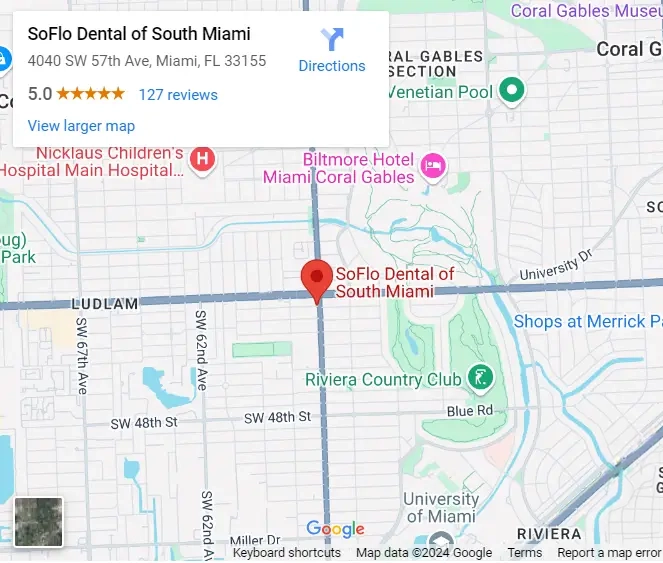
OUR TWO LOCATIONS
Kendall Miami & South Miami
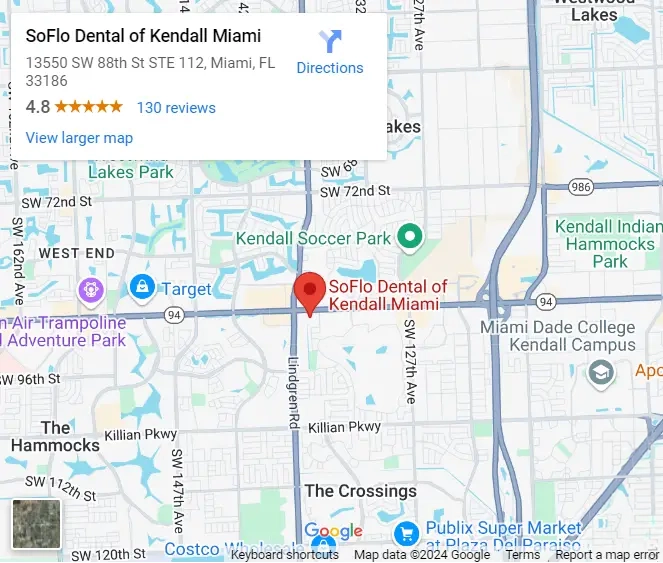
13550 SW. 88th St., Unit #112, Miami, FL 33186
Working Hours
Mon: 11:30 a.m. – 8:00 p.m.
Tue: 9:00 a.m. – 5:00 p.m.
Wed: 11:30 a.m. – 8:00 p.m.
Thu: 9:00 a.m. – 4:30 p.m.
Fri: 9:00 a.m. – 4:30 p.m.
Sat: By Appointment Only
Sun: Closed
4040 SW 57th Ave, Miami, FL 33155
Working Hours
Mon: 9:00 a.m. – 5:00 p.m.
Tue: 9:00 a.m. – 5:00 p.m.
Wed: 8:30 a.m. – 8:00 p.m.
Thu: 9:00 a.m. – 5:00 p.m.
Fri: 9:00 a.m. – 5:00 p.m.
Sat: By Appointment Only
Sun: Closed

Welcome to SoFlo Dentistry, we provide exceptional dental care tailored to your needs. For appointments or inquiries.


