
Benefits of All-on-4 Implants: Fixed Teeth for a Full Arch
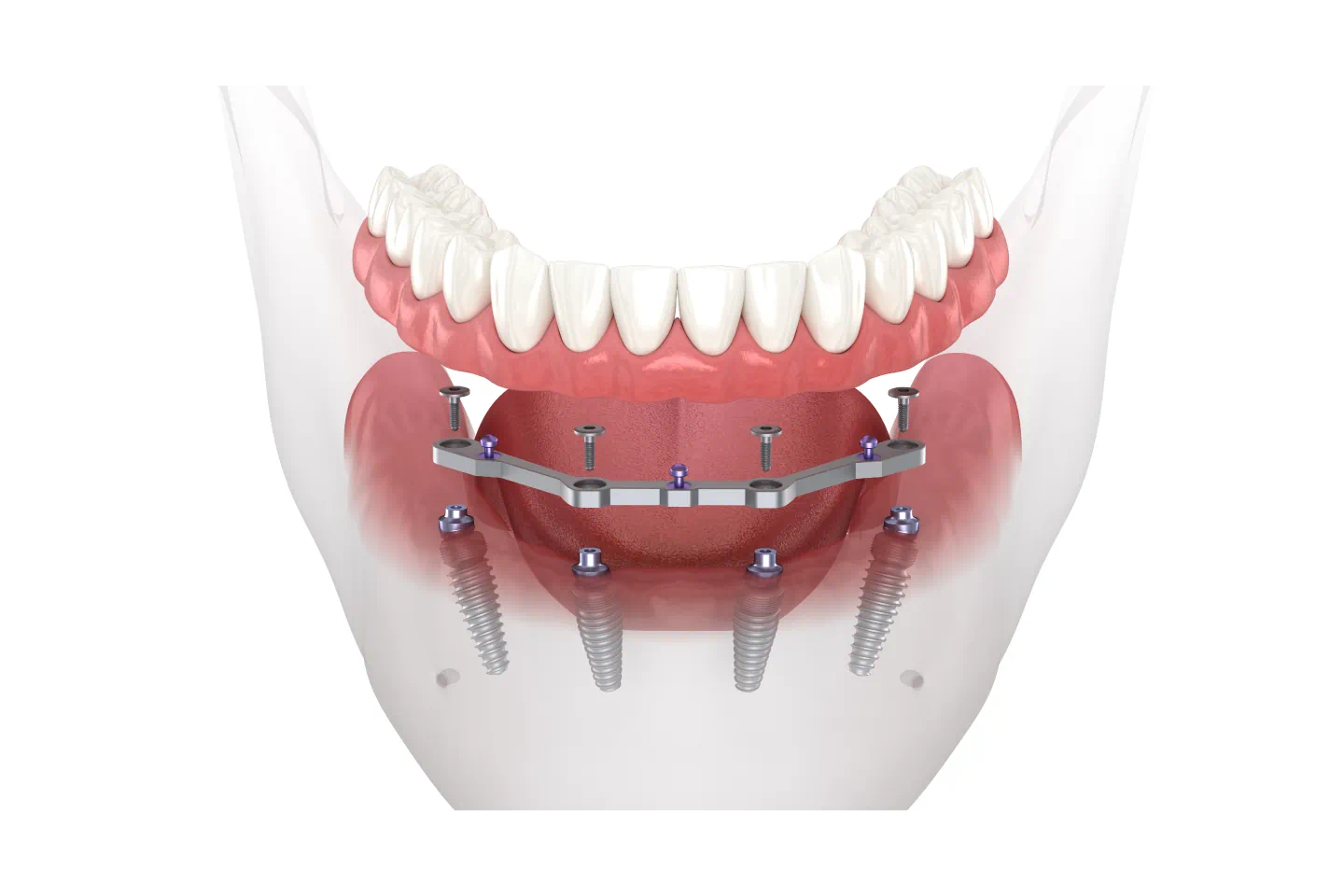
The main benefit of All-on-4 implants is that a whole arch of missing or failing teeth is replaced with a fixed set of teeth held in place by just four implants. Nothing slides, clicks or needs adhesive, and you chew with a bite that feels far closer to natural teeth than a removable denture ever does.
If you have been living with loose dentures, or you have been told that most of your remaining teeth cannot be saved, that is a big deal. It changes what you can eat at dinner, how you laugh in photos and whether you think about your teeth at all during the day.
This post walks through what All-on-4 involves, the benefits that matter in day to day life, the honest drawbacks, and how to tell whether it suits you. If you are still at the stage of comparing all your dental implant options, it should help you ask better questions at your consultation.
What Are All-on-4 Implants?
All-on-4 is a full arch implant treatment where four implants support a complete, fixed bridge of replacement teeth. Instead of placing one implant for every missing tooth, the dentist places four implants in the upper or lower jaw and attaches a custom made set of teeth on top. According to Nobel Biocare, All-on-4 is its registered trademark, and many dental offices use the term for the same basic approach.
The two implants at the front go in fairly upright. The two at the back are usually tilted, which lets them anchor into firmer bone further along the jaw and gives the bridge a wider base to rest on. That angle is the clever part of the design. Whether it suits you depends on your jawbone, which is why a scan comes before any promises.
You may also hear the same idea called a fixed full arch restoration, which is the wording our implants page uses.
The Main Benefits of All-on-4 Implants
Teeth that stay where they belong
Removable dentures sit on top of the gums and rely on suction, adhesive or both. They shift when you speak, rub when you chew and sometimes drop at the worst possible moment. An All-on-4 bridge is anchored to implants in the bone, so it does not move. For many people, simply not having to think about their teeth all day is the benefit that counts most.
A stronger, more confident bite
Chewing with a denture can feel like using about half the strength you used to have, and people often quietly drop apples, steak and raw vegetables from their meals. Because the bridge is held by implants, the force of biting is passed into the jaw the way it is with natural roots. Many people go back to foods they had given up. It is still sensible to start softly while you heal and build up from there.
Support for the jawbone
When teeth are lost, the bone that held them slowly shrinks because it is no longer being used. Over the years this can change how the lower face looks and make dentures fit worse and worse. Implants act like tooth roots and keep the bone working, which is why they are described as helping to preserve bone. If you are already dealing with bone loss that comes with gum disease, this is something to raise early, because the amount of bone you have left shapes your options.
Fewer implants than treating each tooth separately
Replacing a full arch one tooth at a time would need many implants, a lot more surgery and a bigger bill. Using four implants to carry the whole arch keeps the treatment more compact. In some cases, the angled back implants can also make use of bone that is already there, which may reduce the need for extra bone grafting. That is not guaranteed, and some jaws still need preparation first.
A natural looking smile
The replacement teeth are made to suit your face, bite and color preferences, so the result does not have to look like a stock set of teeth. Because there is no plastic plate covering your gums or the roof of your mouth in a fixed bridge, speaking and tasting food can feel more normal than it does with a full upper denture.
Daily care that feels familiar
You brush your teeth, clean under the bridge with the tools your dentist shows you and keep your regular cleanings. There is no overnight soaking and no adhesive to scrub off. It does need real attention, though, and we cover the routine further down.
All-on-4 vs Removable Dentures
Dentures are not a bad choice for everyone. They cost less upfront and need no surgery, so they suit many people well. The differences show up in daily life, and it helps to see them side by side. We also have a longer piece if you want to weigh implants against dentures in more detail.
- Stability: dentures can shift when you talk or eat. All-on-4 teeth are fixed in place and do not move.
- Chewing: dentures reduce bite strength, and some foods get avoided. All-on-4 feels much closer to natural biting.
- Jawbone: with dentures, bone continues to shrink over time. Implants help keep the bone working.
- Adhesive: dentures often need it. All-on-4 does not.
- Upfront treatment: dentures need no surgery. All-on-4 needs implant surgery and a healing period.
- Upfront cost: dentures cost less. All-on-4 costs more.
- Fit changes: dentures need relines or replacements as the jaw changes. All-on-4 needs regular checks and bridge maintenance over the years.
All-on-4 vs One Implant Per Tooth
Some patients do not need a full arch. If you are missing a few teeth and the rest are healthy, individual implants or an implant supported bridge often make more sense, because they leave your natural teeth alone. All-on-4 is meant for the situation where most or all of the teeth in an arch are gone, failing or not worth saving.
It is also worth knowing that a full arch with more than four implants is sometimes recommended, for example when the jaw is wide or the bite forces are heavy. The number four is the name of a technique, not a rule that every case must follow.
Who Is a Good Candidate for All-on-4?
You may be a good candidate if you have lost most of the teeth in one arch, your remaining teeth are badly decayed, loose or affected by advanced gum disease, or your dentures no longer fit well. You also need reasonably healthy gums and enough jawbone to hold the implants, or be willing to have the bone built up first.
Certain things make treatment more complicated: smoking, uncontrolled diabetes, active gum disease that has not been treated, and some medications that affect bone healing. None of these automatically rules you out. They simply mean your dentist will want to sort them out before surgery. For a fuller checklist, see whether you are a candidate for dental implants.
What the All-on-4 Process Looks Like
Every case has its own timeline, so treat the order below as a general picture rather than a promise.
- Consultation and imaging. We look at your mouth, review your medical history and take scans to check the bone in your jaw.
- Treatment plan. We talk through whether All-on-4 or another option fits best, including any teeth that need to come out and any gum treatment you need first.
- Implant surgery. The implants are placed under local anesthesia, with sedation discussed if you feel anxious.
- Healing. The implants fuse with the bone over a number of months. A temporary set of teeth may be arranged for this period, depending on your case.
- Final teeth. Once the implants are stable, your permanent bridge is made and fitted, and we check your bite carefully.
The healing stage is where patience pays off. Rushing it is one of the surest ways to put the long term result at risk.
Looking After Your All-on-4 Implants
Implants cannot decay, but the gums and bone around them can still become infected if plaque is left alone. Brush twice a day, clean under and around the bridge with the tools your dentist recommends, and keep your professional cleanings and checkups. Avoid chewing ice, hard candy or anything you would not want to bite with a natural tooth.
If you grind your teeth at night, mention it. A night guard can protect a bridge much the way it protects natural teeth. For the everyday routine, our advice on caring for dental implants covers the details, and you can read about how long dental implants last if you are thinking about the years ahead.
Are All-on-4 Implants Worth It?
For the right person, they can be. They are also a significant commitment, and it would be unfair to skip the downsides.
The upfront cost is higher than dentures. There is surgery, followed by a healing period with a restricted diet. The bridge may need professional maintenance or repair over the years, just as any dental work does. And they are not suitable for everyone. If cost is the question on your mind, what implants cost explains how pricing is usually worked out. The best next step is a proper exam, since the answer depends on your mouth, not on a general rule.
Talk to SoFlo Dental About Full Arch Implants
If you are tired of dentures that move, or you are facing the loss of most of your teeth, a conversation is a good place to start. We will examine your mouth, explain which options really fit, and tell you plainly if All-on-4 is not the best route for you. Book a consultation at our Kendall or South Miami office and bring your questions with you.
Frequently Asked Questions on All-on-4 Implants
Do All-on-4 implants look natural?
Yes, they can. The teeth are custom made for your face and smile, and the fixed design avoids the bulky plate that makes some dentures look obvious. Shade, shape and length are all things you can discuss before the final bridge is made.
Is All-on-4 painful?
The surgery is done with local anesthesia, and sedation can be discussed if you are anxious. Expect soreness, some swelling and a few days of taking things easy afterward, which is usual with implant surgery. Your dentist will explain how to manage discomfort.
How long do All-on-4 implants last?
Implants can last many years with good care, and the bridge itself may need repair or replacement at some point because it takes daily wear. The biggest factors are your cleaning routine, regular checkups, and habits such as smoking or grinding.
Can I have All-on-4 if I have gum disease?
Usually the gum disease has to be treated and controlled first. Implants placed in an infected mouth are far more likely to fail, so we aim for healthy gums before surgery.
Can I have All-on-4 on both the upper and lower jaw?
Yes. Some patients restore one arch and some restore both, either together or at different times. Your dentist will plan this around your bone, your bite and your budget.
SCHEDULE YOUR VISIT!
For appointments or inquiries.
*Your Full Name
*Location
*Your Email
*Your phone number
*Message body
I allow this website to store my submission so they can respond to my inquiry.
OUR TWO LOCATIONS
Kendall Miami & South Miami
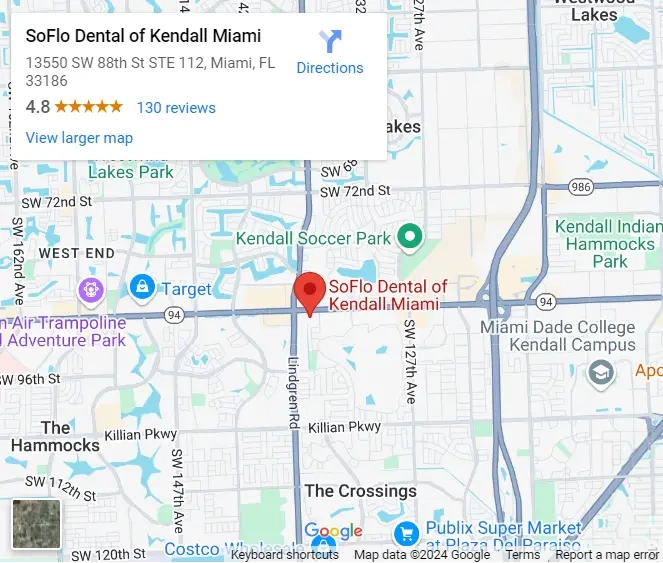
13550 SW. 88th St., Unit #112, Miami, FL 33186
Working Hours
Mon: 11:30 a.m. – 8:00 p.m.
Tue: 9:00 a.m. – 5:00 p.m.
Wed: 11:30 a.m. – 8:00 p.m.
Thu: 9:00 a.m. – 4:30 p.m.
Fri: 9:00 a.m. – 4:30 p.m.
Sat: By Appointment Only
Sun: Closed
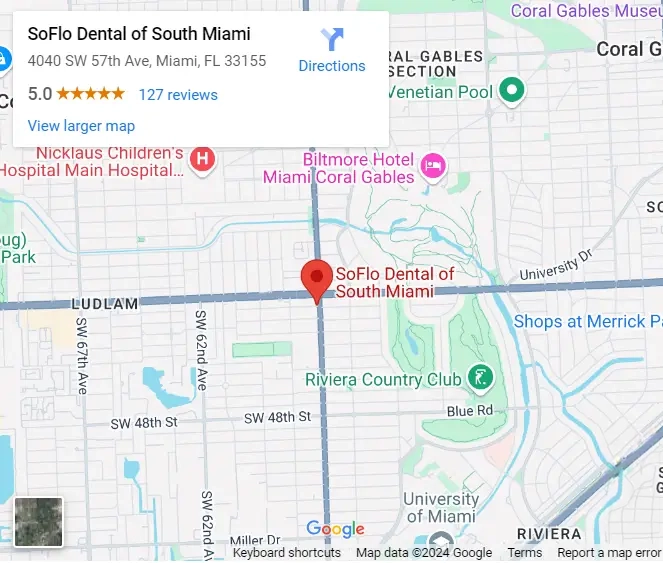
4040 SW 57th Ave, Miami, FL 33155
Working Hours
Mon: 9:00 a.m. – 5:00 p.m.
Tue: 9:00 a.m. – 5:00 p.m.
Wed: 8:30 a.m. – 8:00 p.m.
Thu: 9:00 a.m. – 5:00 p.m.
Fri: 9:00 a.m. – 5:00 p.m.
Sat: By Appointment Only
Sun: Closed

Welcome to SoFlo Dentistry, we provide exceptional dental care tailored to your needs. For appointments or inquiries.


