
Chipped Tooth? What to Do Before You Reach the Dentist

Chipping a tooth can happen unexpectedly while eating something hard, playing sports, or experiencing an accidental fall. Even a small chip can leave the tooth feeling rough or sensitive, while a larger fracture may expose the inner layers of the tooth and cause significant discomfort.
Knowing what to do after chipping a tooth can help protect the affected area until you receive professional dental care. Although some chips may be minor, others require prompt treatment to prevent further damage.
At SoFlo Dental of Kendall Miami and SoFlo Dental of South Miami, patients can seek dental evaluation for chipped teeth and other concerns involving damaged teeth. Our team prioritizes same-day appointments for dental emergencies, so you do not have to wait if the injury cannot be put off. Understanding the right first-aid steps can help you manage the situation while arranging an appointment.
What Should You Do Immediately After Chipping a Tooth?
If you chip a tooth, try to remain calm and avoid putting pressure on the damaged area. The next steps depend on the size of the chip, whether you are experiencing pain, and whether the tooth has been injured below the surface.
Here is what you can do while preparing to see your dentist:
- Rinse your mouth gently with lukewarm water to remove food particles and debris.
- If there is bleeding, apply gentle pressure with clean gauze.
- Use a cold compress on the outside of your cheek if swelling develops.
- Avoid chewing on the affected side.
- Choose soft foods and avoid anything hard, crunchy, or very hot or cold if it triggers sensitivity.
- Save any broken tooth fragment you can find and take it to your dental appointment.
- Contact your dentist to arrange an evaluation.
If the injury causes severe pain, significant swelling, uncontrolled bleeding, or difficulty breathing or swallowing, seek urgent medical attention.
Can a Chipped Tooth Wait Until Your Next Dental Appointment?
Not every chipped tooth requires emergency treatment, but it is difficult to judge the extent of damage from appearance alone.
A tiny chip that causes no discomfort may be less urgent than a fracture accompanied by pain, bleeding, or sensitivity. However, even a minor chip should be assessed by a dentist to determine whether the tooth needs smoothing, repair, or further treatment.
Contact your dentist promptly if you notice:
- Pain when biting or chewing
- Sensitivity to hot, cold, or sweet foods
- A large or deep break
- A visible crack extending across the tooth
- Bleeding around the affected tooth
- Swelling or tenderness in the surrounding gums
- A change in the way your teeth fit together
If the tooth has been displaced, feels loose following an injury, or has sustained a substantial fracture, seek urgent dental care rather than waiting for a routine visit. Our emergency dentist team can see you quickly and relieve pain while a treatment plan is prepared.
How Can You Tell How Serious a Chipped Tooth Is?
Chips and cracks range from surface-level to deep, and the depth decides how urgent treatment is. A small chip in the outer enamel may only feel rough. A deeper break can expose the dentin underneath, which often causes sensitivity to temperature or sweet foods. If the break reaches the pulp at the center of the tooth, pain tends to be sharper or constant, and the tooth may bleed or darken over time.
Pain when you release a bite can point to a crack that is not visible, so a chip should never be judged by how it looks alone. If you are unsure whether you are dealing with a chip or a deeper crack, this article on the difference between a cracked and a broken tooth explains the warning signs in more detail.
How Can You Protect a Chipped Tooth at Home?
Until you reach the dentist, the main goal is to avoid further damage and keep the area comfortable.
1. Avoid Chewing on the Damaged Tooth
Biting down on a chipped tooth can extend the fracture or place additional pressure on already weakened tooth structure. Try to chew on the opposite side and choose foods that require minimal effort.
Avoid hard foods such as nuts, ice, hard candy, and crusty bread until your tooth has been assessed.
2. Keep Your Mouth Clean
Rinse gently with lukewarm water after eating to help remove food debris. Continue brushing your teeth carefully with a soft-bristled toothbrush, taking care around the damaged area.
Keeping your mouth clean helps control plaque buildup while you wait for treatment. Avoid aggressive brushing or touching the damaged tooth repeatedly with your fingers.
3. Manage Sensitivity
A chipped tooth may become sensitive if the underlying dentin is exposed. In more serious cases, the damage may reach the pulp, which contains nerves and blood vessels.
Avoid foods and drinks that trigger discomfort. If you normally use toothpaste for sensitive teeth, it may help with some forms of sensitivity, but it will not repair the chip or treat deeper damage.
If pain is severe or persistent, contact your dentist for advice rather than relying solely on home remedies.
4. Protect Sharp Edges
A rough or sharp edge may irritate your tongue or the inside of your cheek. Dental wax may help temporarily cover the edge if you have it available.
Do not attempt to file the tooth down or attach a broken fragment using household glue. These actions can cause further damage or complicate treatment.
5. Keep the Broken Fragment if Possible
If you can find the broken piece, gently rinse it with clean water and place it in a clean container. Bring it to your dental appointment.
Depending on the type and extent of damage, your dentist may be able to use the fragment during treatment. However, not every broken piece can be reattached.
What Causes Teeth to Chip?
Teeth are strong, but they can still fracture under excessive pressure or when their structure has been weakened.
Common causes of chipped teeth include:
- Biting hard foods: Chewing ice, hard candy, or other firm objects can place excessive pressure on teeth.
- Accidents or sports injuries: A blow to the mouth can chip or fracture a tooth.
- Teeth grinding: Repeated clenching and grinding can wear down enamel and increase the risk of damage.
- Untreated tooth decay: Decay can weaken tooth structure, making it more vulnerable to breaking.
- Large fillings or previous restorations: Teeth with significant structural loss may be more susceptible to fractures.
- Age-related wear: Teeth can become more vulnerable to damage as they accumulate wear over time.
Identifying the cause of a chipped tooth can help your dentist recommend appropriate treatment and discuss ways to reduce the risk of future damage. Everyday habits are often to blame, and this look at bad habits that can damage your teeth is a useful reminder.
How Will a Dentist Treat a Chipped Tooth?
Treatment depends on the location, size, and depth of the chip, as well as the amount of healthy tooth structure remaining.
Your dentist will examine the affected tooth and may recommend dental imaging when appropriate to evaluate the damage.
Common treatment options include the following.
Dental Bonding
For small chips and certain cosmetic imperfections, dental bonding may be an option. A tooth-colored composite resin is applied and shaped to restore the tooth's appearance and contour.
Bonding is generally suitable for selected minor defects, although its durability depends on the tooth's location, the extent of damage, and biting forces.
Dental Veneers
If a chip affects the visible front surface of a tooth, a veneer may be considered in selected cases. A veneer covers the front surface of the tooth to improve its appearance.
Your dentist will determine whether a veneer is appropriate based on the remaining tooth structure, the extent of damage, and your overall oral health.
Dental Crowns
A dental crown may be recommended when a tooth has lost substantial structure or needs additional protection. The crown covers the tooth to restore its shape and function.
The decision depends on the severity of the fracture and whether enough healthy tooth structure remains to support the restoration.
Root Canal Treatment
If a fracture exposes or significantly damages the pulp, root canal treatment may be necessary to address inflammation or infection and help preserve the tooth.
A crown or another suitable restoration may be needed afterward, depending on the remaining tooth structure.
Tooth Extraction
Extraction may be necessary if the tooth is severely fractured and cannot be predictably restored. Your dentist will assess whether the tooth can be saved before recommending removal.
Depending on the circumstances, replacement options may be discussed after the area has healed.
How Can You Prevent Chipped Teeth in the Future?
Although not every dental injury can be prevented, certain habits can help reduce your risk of chipping a tooth.
Consider these preventive measures:
- Avoid chewing ice and other hard objects.
- Do not use your teeth to open packages or bite non-food items.
- Wear a properly fitted mouthguard during contact sports.
- Discuss a night guard with your dentist if you grind your teeth.
- Maintain good oral hygiene to help prevent tooth decay.
- Attend regular dental examinations to identify weakened teeth or existing restorations that need attention.
- Seek treatment for cavities before they cause substantial structural damage.
If you have a history of chipped teeth or repeated fractures, your dentist can assess possible contributing factors and recommend suitable preventive measures.
Dental Care for Chipped Teeth at SoFlo Dental
A chipped tooth can range from a minor cosmetic concern to a more significant injury that affects the inner structure of the tooth. Prompt assessment can help determine the extent of the damage and whether treatment is necessary.
At SoFlo Dental of Kendall Miami and SoFlo Dental of South Miami, patients can discuss concerns involving chipped, cracked, or damaged teeth and learn about appropriate restorative options.
If you have chipped a tooth, avoid chewing on the affected side and arrange a dental evaluation. Seeking advice early can help you understand the available treatment options and protect your oral health.
Need Dental Care for a Chipped Tooth?
If you have chipped a tooth, do not assume it is harmless simply because the pain is mild or absent. Contact SoFlo Dental to arrange an evaluation and discuss the next steps for your dental care. You can reach SoFlo Dental of Kendall Miami at 305-662-2599 and SoFlo Dental of South Miami at 786-296-0004.
Frequently Asked Questions
Q: Is a chipped tooth a dental emergency?
The urgency depends on the extent of the damage and your symptoms. A small chip without pain may not require emergency treatment, but it should still be assessed. Severe pain, significant swelling, uncontrolled bleeding, a loose or displaced tooth, or a deep fracture requires prompt attention. Difficulty breathing or swallowing requires emergency medical care.
Q: Can a chipped tooth heal on its own?
No. Enamel does not grow back once a piece of the tooth has broken away. Minor chips may not require extensive treatment, but a dentist should assess the damage and determine whether smoothing, bonding, or another restoration is appropriate.
Q: What should I eat after chipping a tooth?
Choose soft foods that require minimal chewing, such as yogurt, mashed potatoes, scrambled eggs, or soft pasta. Avoid hard, crunchy, sticky, or very hot or cold foods if they cause discomfort. Chew on the opposite side of your mouth until your dentist has assessed the tooth.
Q: Can a dentist repair a chipped tooth in one visit?
Some minor chips can be repaired with dental bonding during a single appointment. More extensive damage may require a crown, additional diagnostic procedures, or treatment of the tooth's inner tissues. The number of visits depends on the severity of the injury and the treatment recommended.
Q: Should I visit a dentist if my chipped tooth does not hurt?
Yes. A chipped tooth can have underlying damage even when it does not cause pain. A dental examination can help determine whether the chip is superficial or whether the tooth needs further treatment. Early assessment can also help reduce the risk of additional damage.
Q: What should I do if my child chips a tooth?
Rinse your child's mouth gently with lukewarm water, apply a cold compress to the cheek if there is swelling, and save any fragment you can find. Call your dentist the same day, because a child's chipped tooth can involve the nerve even when it looks minor. Seek urgent care if the tooth is loose, bleeding does not stop, or your child has trouble breathing or swallowing.
SCHEDULE YOUR VISIT!
For appointments or inquiries.
*Your Full Name
*Location
*Your Email
*Your phone number
*Message body
I allow this website to store my submission so they can respond to my inquiry.
OUR TWO LOCATIONS
Kendall Miami & South Miami
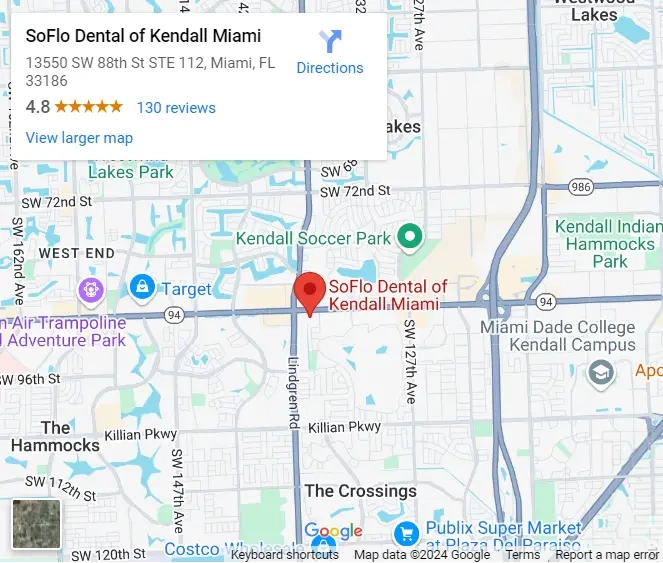
13550 SW. 88th St., Unit #112, Miami, FL 33186
Working Hours
Mon: 11:30 a.m. – 8:00 p.m.
Tue: 9:00 a.m. – 5:00 p.m.
Wed: 11:30 a.m. – 8:00 p.m.
Thu: 9:00 a.m. – 4:30 p.m.
Fri: 9:00 a.m. – 4:30 p.m.
Sat: By Appointment Only
Sun: Closed
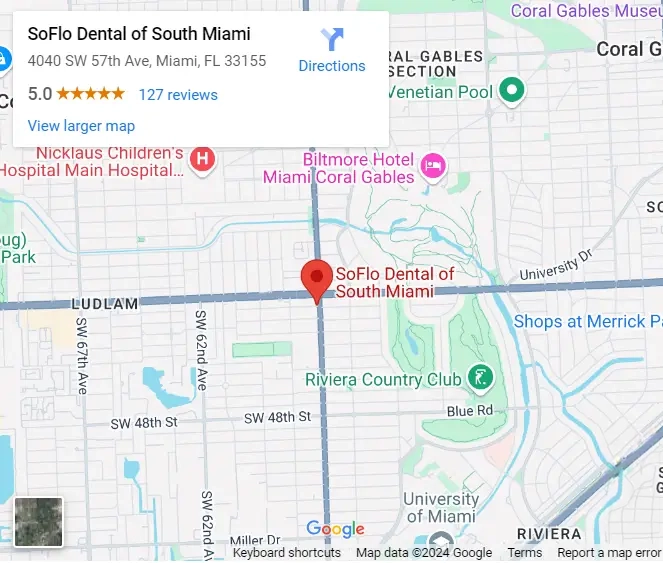
4040 SW 57th Ave, Miami, FL 33155
Working Hours
Mon: 9:00 a.m. – 5:00 p.m.
Tue: 9:00 a.m. – 5:00 p.m.
Wed: 8:30 a.m. – 8:00 p.m.
Thu: 9:00 a.m. – 5:00 p.m.
Fri: 9:00 a.m. – 5:00 p.m.
Sat: By Appointment Only
Sun: Closed

Welcome to SoFlo Dentistry, we provide exceptional dental care tailored to your needs. For appointments or inquiries.


