
What Should Parents Do When Their Child Has a Dental Emergency in Miami?

Dental emergencies can be especially stressful when they happen to a child. A fall at the playground, a sports injury, a broken tooth, or sudden tooth pain can leave parents unsure about what to do first. Knowing how to respond can help protect your child's teeth, reduce discomfort, and determine whether immediate dental or medical attention is needed.
Not every dental injury requires a trip to the emergency room, but some situations need prompt evaluation by an emergency dentist. A knocked-out permanent tooth, severe toothache, facial swelling, uncontrolled bleeding, or significant dental trauma should not be ignored.
At SoFlo Dental of Kendall Miami and SoFlo Dental of South Miami, we provide emergency dental care for patients of all ages, including children. Our emergency dentistry services address problems such as severe tooth pain, knocked-out teeth, broken teeth, infections, and dental injuries. SoFlo Dental also states that it prioritizes same-day appointments for dental emergencies.
Understanding what to do when your child has a dental emergency can help you act quickly and confidently.
What Is Considered a Dental Emergency for a Child?
Children can experience many of the same dental emergencies as adults, but injuries involving developing teeth require special attention.
Common pediatric dental emergencies include:
- A knocked-out permanent tooth
- A broken or severely chipped tooth
- Severe or persistent tooth pain
- A loose tooth caused by an injury
- Swelling around the gums, face, or jaw
- A dental abscess or suspected infection
- Significant bleeding from the mouth
- A dental injury following a fall or accident
- A damaged filling or other dental restoration
If you are unsure whether your child's situation requires urgent care, contact a dental office and explain the symptoms and circumstances surrounding the injury.
What Should Parents Do First After a Dental Injury?
The first step is to stay calm and assess what happened.
Check your child for:
- Severe pain
- Bleeding
- Swelling
- A broken or missing tooth
- Damage to the gums or mouth
- Difficulty opening or closing the mouth
- Signs of facial injury
If the child has experienced a significant head or facial injury, loss of consciousness, difficulty breathing, difficulty swallowing, or uncontrolled bleeding, seek immediate medical attention.
If the emergency appears to involve the teeth or gums without these serious medical symptoms, contact an emergency dentist promptly.
What Should You Do If Your Child Knocks Out a Permanent Tooth?
A knocked-out permanent tooth is one of the most time-sensitive dental emergencies.
If your child's permanent tooth has been completely knocked out:
- Find the tooth if possible.
- Handle it by the crown, which is the part normally visible in the mouth. Avoid touching the root.
- Gently rinse it if it is dirty, but do not scrub the tooth.
- If possible, carefully place the tooth back into the socket without forcing it.
- If reinserting the tooth is not possible, keep it moist and bring it with your child.
- Contact an emergency dentist immediately.
For additional guidance, parents can review this information about what to do after a knocked-out permanent tooth.
The sooner a knocked-out permanent tooth is evaluated, the sooner the dentist can determine whether it may be possible to preserve it.
What If a Baby Tooth Is Knocked Out?
A knocked-out baby tooth should also be evaluated by a dentist, but parents should not attempt to put a baby tooth back into the socket.
The dentist can evaluate the area and determine whether there has been damage to the gums or surrounding structures and whether the developing permanent tooth needs monitoring.
What Should You Do If Your Child Chips or Breaks a Tooth?
Children can chip or break teeth during sports, falls, accidents, or while biting something hard.
If a tooth breaks:
- Have your child rinse gently with water.
- If there is bleeding, apply gentle pressure with clean gauze.
- Save any broken tooth fragment if possible.
- Apply a cold compress to the outside of the face if swelling develops.
- Avoid letting your child chew on the injured side.
- Contact a dentist for an evaluation.
Even if the broken tooth does not hurt, it is worth having it examined. A fracture can sometimes expose sensitive parts of the tooth or make the tooth more vulnerable to additional damage.
What If Your Child Has a Severe Toothache?
A toothache in a child should not automatically be dismissed as a normal part of growing up.
Persistent or severe tooth pain may be associated with:
- Tooth decay
- Dental infection
- A damaged or cracked tooth
- An injury
- Inflammation inside the tooth
- Problems involving the gums
If your child's tooth pain is severe, persistent, or accompanied by swelling or fever, contact a dentist promptly.
A dental examination can help determine the cause of the pain and whether emergency treatment is needed.
Parents can also learn more about situations involving a severe toothache and when urgent dental evaluation may be appropriate.
What If Your Child's Face or Gums Are Swollen?
Swelling around a child's tooth, gums, jaw, or face can be a sign of infection or another dental problem that requires prompt attention.
Parents should contact a dentist if their child develops:
- Swollen gums
- Facial swelling
- Jaw swelling
- Severe tooth pain
- Fever associated with dental symptoms
- Pus or drainage
- Difficulty chewing
Dental infections should not be ignored because they can worsen if the underlying problem is not treated.
If your child's swelling is severe or they are having difficulty breathing or swallowing, seek immediate medical attention.
A dental abscess can cause symptoms such as swelling, pain, and drainage, so parents should seek prompt professional evaluation when these signs occur.
What Should Parents Do About Mouth Bleeding?
Mouth injuries can bleed more than parents may expect because the mouth contains many blood vessels. However, persistent or heavy bleeding should be taken seriously.
For a minor mouth injury:
- Use clean gauze or a clean cloth.
- Apply steady, gentle pressure to the bleeding area.
- Keep your child calm.
- Apply a cold compress to the outside of the face if swelling is present.
If bleeding continues despite firm pressure, contact a dentist or seek emergency medical care depending on the severity of the injury.
SoFlo Dental also recommends prompt evaluation for significant oral injuries, including cuts involving the gums, tongue, or cheeks.
For additional information about managing a mouth injury, parents can review guidance on when oral cuts may require urgent dental care.
When Should Parents Take Their Child to the Emergency Room?
Some situations require medical rather than dental emergency care.
Take your child to the nearest emergency room or seek immediate medical attention if they have:
- Difficulty breathing
- Difficulty swallowing
- Severe facial swelling
- Uncontrolled bleeding
- Loss of consciousness
- A serious head injury
- Significant facial trauma
- A suspected jaw fracture
- Other symptoms suggesting a serious medical emergency
For an emergency that primarily involves the teeth or gums, an emergency dentist may be the appropriate first point of contact.
What Should Parents Bring to the Emergency Dental Appointment?
When taking your child for emergency dental care, bring any information that may help the dental team understand what happened.
This may include:
- The time and location of the injury
- How the injury occurred
- Any tooth fragments that were recovered
- The child's dental history
- A list of medications the child takes
- Insurance information
- Information about any previous dental treatment
If a tooth has been knocked out, bring the tooth with your child and keep it moist while traveling to the dental office.
What Happens During a Child's Emergency Dental Visit?
The dentist will first determine the nature and severity of the problem.
The visit may involve:
Reviewing the Injury
The dentist may ask how the accident occurred, when it happened, and whether your child experienced pain, bleeding, or other symptoms.
Examining the Teeth and Gums
The dentist will examine the affected tooth and surrounding tissues for visible damage, swelling, bleeding, or other concerns.
Taking Dental X-Rays
X-rays may be recommended when the dentist needs to evaluate the tooth's root, surrounding bone, or developing permanent teeth.
Stabilizing the Problem
Depending on the emergency, treatment may focus on relieving pain, protecting a damaged tooth, controlling an infection, or stabilizing an injured area.
Planning Follow-Up Care
Some dental injuries require monitoring or additional treatment. Your child's dentist can explain what to expect and whether another appointment is necessary.
Parents who want to prepare their child for a dental visit can also learn what to expect during a child's dental appointment.
How Can Parents Help Prevent Dental Emergencies?
Children are active, and accidents cannot always be prevented. However, parents can take several steps to reduce the risk of dental injuries.
Encourage your child to:
- Wear a properly fitted mouthguard during sports.
- Avoid chewing ice and other hard objects.
- Brush twice daily with fluoride toothpaste.
- Floss regularly when appropriate.
- Visit the dentist for routine examinations.
- Tell a parent or adult about tooth pain rather than hiding it.
- Follow safety precautions during physical activities.
Regular dental visits can also help identify dental problems before they become urgent.
Why Prompt Treatment Matters for Children's Teeth
A child's dental emergency can affect more than immediate comfort. Injuries or infections may also affect the surrounding teeth and oral structures.
Prompt dental care can help:
- Relieve pain
- Address infections
- Protect damaged teeth
- Evaluate injuries to developing teeth
- Reduce the risk of complications
- Determine whether additional treatment is necessary
Getting your child evaluated quickly can also give parents peace of mind when it is difficult to determine how serious an injury may be.
Emergency Dental Care for Children at SoFlo Dental
At SoFlo Dental of Kendall Miami and SoFlo Dental of South Miami, we understand how stressful it can be when a child experiences a dental emergency.
Our emergency dentistry services are available for patients of all ages and address urgent concerns such as severe tooth pain, broken or chipped teeth, knocked-out teeth, infections, and dental trauma. SoFlo Dental states that it prioritizes same-day appointments for dental emergencies.
Our goal is to provide prompt evaluation, help manage your child's immediate dental concern, and explain the treatment options available based on the specific situation.
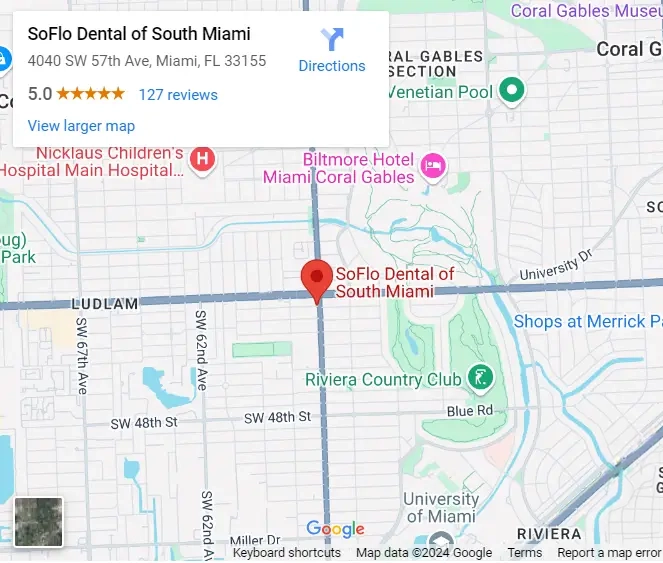
SoFlo Dental has two Miami-area locations: SoFlo Dental of Kendall Miami and SoFlo Dental of South Miami.
Does Your Child Need Emergency Dental Care in Miami?
If your child has severe tooth pain, a knocked-out or broken tooth, swelling, significant bleeding, or another urgent dental concern, contact SoFlo Dental as soon as possible for guidance and emergency appointment availability.
For dental emergencies, prompt evaluation can help protect your child's oral health and determine the appropriate treatment.
Frequently Asked Questions on Dental Emergencies of Children
Q: What should I do if my child's permanent tooth gets knocked out?
A: Handle the tooth by the crown rather than the root and gently rinse it if necessary without scrubbing. If possible, carefully place it back into the socket. If that is not possible, keep it moist and contact an emergency dentist immediately. A knocked-out permanent tooth requires prompt evaluation.
Q: Should I put a knocked-out baby tooth back in?
A: No. Parents should not attempt to reinsert a knocked-out baby tooth. Contact a dentist so the injury can be evaluated and the area monitored appropriately.
Q: When should I take my child to an emergency dentist for a toothache?
A: Contact an emergency dentist if your child's toothache is severe, persistent, or accompanied by swelling, fever, or other concerning symptoms. These signs can indicate decay, infection, or another dental problem requiring prompt treatment.
Q: Is a broken baby tooth a dental emergency?
A: A broken baby tooth should be evaluated by a dentist, particularly if the child is experiencing pain, bleeding, swelling, or sensitivity. The dentist can determine whether the tooth requires treatment and whether there is any concern involving the developing permanent tooth.
Q: Can children receive same-day emergency dental care at SoFlo Dental?
A: SoFlo Dental states that it prioritizes same-day appointments for dental emergencies. Availability can vary, so parents should contact the office as soon as possible and explain their child's symptoms and the circumstances of the injury.
Q: When should I take my child to the ER instead of an emergency dentist?
A: Seek immediate medical attention if your child has difficulty breathing or swallowing, severe facial swelling, uncontrolled bleeding, loss of consciousness, a serious head injury, or suspected major facial or jaw trauma. For emergencies primarily involving the teeth and gums, an emergency dentist can evaluate and treat the dental problem.
SCHEDULE YOUR VISIT!
For appointments or inquiries.
*Your Full Name
*Location
*Your Email
*Your phone number
*Message body
I allow this website to store my submission so they can respond to my inquiry.
OUR TWO LOCATIONS
Kendall Miami & South Miami
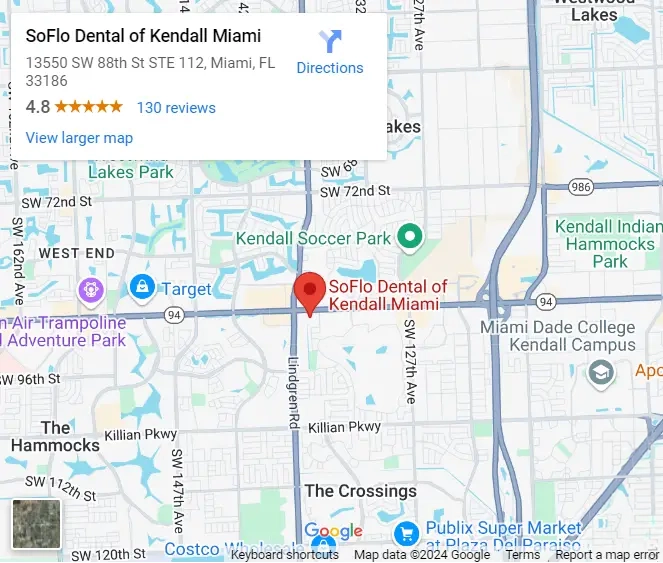
13550 SW. 88th St., Unit #112, Miami, FL 33186
Working Hours
Mon: 11:30 a.m. – 8:00 p.m.
Tue: 9:00 a.m. – 5:00 p.m.
Wed: 11:30 a.m. – 8:00 p.m.
Thu: 9:00 a.m. – 4:30 p.m.
Fri: 9:00 a.m. – 4:30 p.m.
Sat: By Appointment Only
Sun: Closed
4040 SW 57th Ave, Miami, FL 33155
Working Hours
Mon: 9:00 a.m. – 5:00 p.m.
Tue: 9:00 a.m. – 5:00 p.m.
Wed: 8:30 a.m. – 8:00 p.m.
Thu: 9:00 a.m. – 5:00 p.m.
Fri: 9:00 a.m. – 5:00 p.m.
Sat: By Appointment Only
Sun: Closed

Welcome to SoFlo Dentistry, we provide exceptional dental care tailored to your needs. For appointments or inquiries.


