
Loose Tooth in Adults: Causes and When to See a Dentist
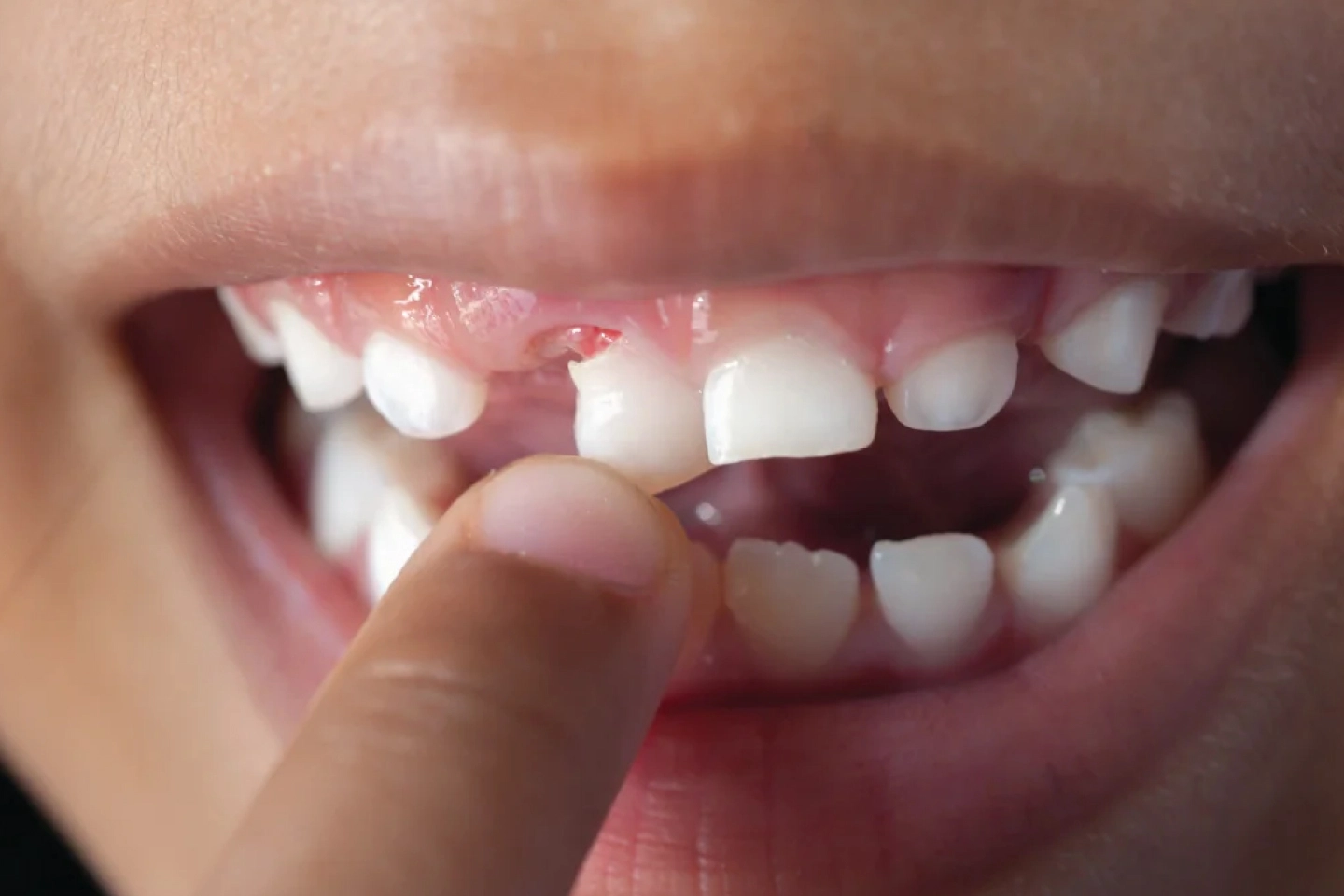
A loose tooth in an adult is not normal, and it is worth getting looked at soon. Unlike children, adults have no replacement tooth waiting underneath, so a permanent tooth that wiggles is telling you that something has weakened the bone, gum or ligaments that hold it in place. The most common cause is gum disease, followed by injury and heavy grinding of the teeth.
The encouraging part is that many loose teeth can be steadied, especially if you are seen early. The sooner someone examines it, the more choices you are likely to have.
This post explains why adult teeth loosen, which symptoms mean you should call us today, what you can do in the meantime, and what treatment can look like. If gum problems are part of the picture, our periodontics service covers how gum disease is treated.
Why Is My Adult Tooth Loose?
A tooth feels loose when the structures around its root, mainly the bone and the fibers that anchor it, have been damaged or worn down. Several different problems can do that, and they often overlap.
Gum disease
This is the leading cause of loose teeth in adults. Plaque and tartar build up along the gumline, the gums become infected and inflamed, and in advanced cases the infection destroys the bone that supports the teeth. According to the Centers for Disease Control and Prevention, nearly half of American adults over 30 have some form of gum disease, and many do not realize it, because early gum disease is often painless.
Other signs usually appear alongside a loose tooth: gums that bleed when you brush, swollen or receding gums, persistent bad breath, and a change in how your teeth fit together. Our guide to gum disease warning signs and prevention lists the early clues in more detail.
Injury to the mouth
A fall, a sports hit or a car accident can push a tooth out of position or damage its supporting tissue. This type of looseness appears suddenly, and it is a dental emergency. If the tooth has been knocked out completely, the steps in our post on a knocked out tooth can improve the chances of saving it.
Teeth grinding and clenching
Grinding puts constant heavy pressure on your teeth, often while you sleep. Over months and years, this can widen the space between the tooth and the socket and make teeth feel loose, flat or sore. Many people do not know they grind until a dentist spots the wear or a partner hears it. A night guard can protect your teeth from further damage, and we explain why in our post on why night guards are essential.
Infection at the root
A deep cavity or a cracked tooth can let bacteria reach the nerve and the tip of the root. The infection can form an abscess, which sometimes loosens the tooth and causes swelling, a bad taste or a pimple-like bump on the gum. This needs prompt care. Our article on the warning signs of a dental abscess explains which symptoms are urgent.
Bite problems
If one tooth hits harder than the others when you close your mouth, perhaps after a new filling, a crown that sits too high or a shift in your teeth, it can take more force than it should and begin to loosen. A small bite adjustment can sometimes fix this quickly.
Bone and medication related causes
Conditions that affect bone strength, such as osteoporosis, can contribute to tooth loosening, and certain medications used to treat bone conditions can interfere with healing in the jaw. Colgate notes that a rare, serious condition linked to some of these medicines can cause loose teeth. This is one reason to keep an up to date medication list handy for your dentist.
Hormonal changes
Pregnancy can make gums more prone to inflammation, and teeth may feel slightly looser for a time. This is usually temporary, but it is still worth mentioning to your dentist so the gums can be looked after.
When Should You See a Dentist About a Loose Tooth?
The honest answer is: soon, every time. A loose adult tooth should always be checked, even if it does not hurt. But some situations are more urgent than others.
- The tooth became loose after a blow, fall or accident: call right away, the same day if possible.
- Swelling in the face or gums, a bad taste, pus or fever: call the same day, as this may be an infection.
- Severe pain, or you cannot bite down on it: call the same day.
- Trouble swallowing or breathing, or swelling spreading to the eye or neck: seek emergency medical care.
- A slight wobble with bleeding gums and no pain: book an appointment in the next few days.
- A tooth that feels a little different when you bite, or has shifted slightly: book an appointment soon, and do not wait for it to get worse.
A common mistake is waiting to see whether the tooth tightens up by itself. Sometimes it does, particularly after a minor bump, but that should be confirmed by an exam. If gum disease is the cause, delay can mean more bone loss, and bone that is lost does not come back on its own.
What to Do Before Your Appointment
These steps will not tighten a loose tooth, but they can keep things from getting worse until you are seen.
- Do not push or wiggle the tooth with your tongue or fingers. Every movement can damage the tissue that is trying to hold on.
- Eat soft foods and chew on the other side of your mouth.
- Keep brushing gently and floss carefully around the tooth. Good cleaning matters more now, not less.
- Rinse with warm salt water to soothe the gums.
- Avoid sticky, hard and chewy foods, and skip tobacco, which slows healing and worsens gum disease.
- If a piece of the tooth or a restoration has come out, bring it with you.
If you are not sure whether your situation counts as urgent, call us and describe what is happening. We would rather you phone in and be told it can wait than ignore something that cannot.
How Do Dentists Diagnose a Loose Tooth?
The dentist will look at your gums, gently test how much the tooth moves, measure the depth of the pockets around it, and check how your teeth meet when you bite. Digital X rays show how much bone surrounds the root and whether there is infection at the tip. Your dentist will also ask about your medical history, your medications, any recent injury and whether you grind your teeth.
That combination tells us whether the tooth has a good chance of being steadied, needs further treatment first, or is better replaced.
Treatment Options for a Loose Tooth
The right treatment depends entirely on the cause. Here is what the options can include.
Deep cleaning for gum disease. When gum disease is behind the looseness, treatment starts with removing plaque, tartar and bacteria from below the gumline, a procedure called scaling and root planing. Once the infection settles, the gums can tighten around the teeth, and some looseness can improve.
- Protecting the tooth from grinding. A custom night guard spreads the force of grinding across the teeth so that it stops overloading the weak ones.
- Adjusting the bite. If one tooth is taking too much pressure, reshaping or adjusting a restoration can ease the load.
- Splinting. In some cases, a dentist may bond a loose tooth to the neighboring teeth so they support each other while the area heals. This is not suitable for every loose tooth.
- Treating infection. If the root is infected, the tooth may need root canal treatment, or in severe cases removal, together with antibiotics where appropriate.
- Removal and replacement. Sometimes a tooth has lost too much support to be saved. Taking it out is then the best way to protect the gums and the teeth next to it, and the space can be filled afterward.
You can read about options for replacing missing teeth, including bridges, dentures and dental implants.
Can a Loose Tooth Tighten Up on Its Own?
Sometimes, but only if the cause goes away. A tooth knocked slightly by a minor bump can settle as the tissue heals. A tooth loosened by gum disease, grinding or infection will not recover unless the underlying problem is treated. This is the reason a dentist needs to see it rather than leaving it to chance.
How to Reduce Your Risk of Loose Teeth
You cannot prevent every cause, since accidents happen. But you can lower the odds. Brush twice a day, clean between your teeth daily, and keep your regular cleanings and exams so gum disease is caught early. Wear a mouthguard for contact sports, and a night guard if you grind. Stopping tobacco use helps your gums considerably. And if your gums bleed, do not shrug it off: it is a sign the gums need attention.
Book an Exam Before It Gets Worse
If you have a tooth that feels loose, we would like to see it. At our Kendall and South Miami offices we will check your gums and bite, take X rays and explain what is going on in plain language, including whether the tooth can be kept. Call us or book an appointment online, and tell us if it followed an injury or comes with swelling so we can see you sooner.
Frequently Asked Questions on Loose Teeth in Adults
Is a loose tooth in an adult an emergency?
It is an emergency if it follows an injury, or comes with swelling, pus, fever or severe pain. If it is only slightly loose and painless, it is still not something to ignore, but it can usually be seen within a few days. When in doubt, call us.
Can a loose adult tooth be saved?
In many cases, yes, especially if it is treated early. Whether it can be saved depends on how much bone and gum support remains and what caused the looseness. A dentist can tell you after an exam and X rays.
Why is only one of my teeth loose?
One tooth can loosen because of localized gum disease, a heavy bite on that tooth, an injury, or an infection at its root. A single loose tooth still deserves a check, since it may be the first sign of a wider gum problem.
Does a loose tooth always mean gum disease?
No, but gum disease is the most common cause in adults. Injury, grinding, infection, bite problems and certain medical conditions can all cause it as well.
What should I not do with a loose tooth?
Do not wiggle it, pull it, chew hard foods on it, or try to glue it. Pulling or forcing a tooth that could have been saved removes the chance of treating it.
Will my loose tooth fall out?
It may, if the cause is not addressed. Teeth can be lost when most of their bone support is gone. Early treatment is the best protection.
SCHEDULE YOUR VISIT!
For appointments or inquiries.
*Your Full Name
*Location
*Your Email
*Your phone number
*Message body
I allow this website to store my submission so they can respond to my inquiry.
OUR TWO LOCATIONS
Kendall Miami & South Miami
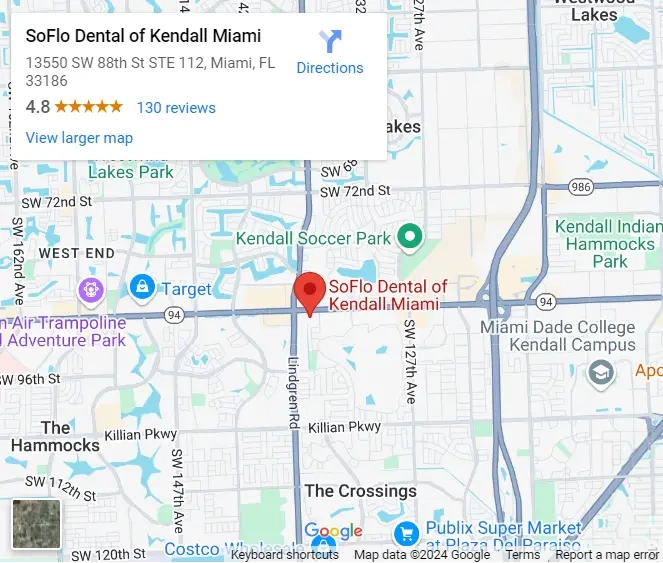
13550 SW. 88th St., Unit #112, Miami, FL 33186
Working Hours
Mon: 11:30 a.m. – 8:00 p.m.
Tue: 9:00 a.m. – 5:00 p.m.
Wed: 11:30 a.m. – 8:00 p.m.
Thu: 9:00 a.m. – 4:30 p.m.
Fri: 9:00 a.m. – 4:30 p.m.
Sat: By Appointment Only
Sun: Closed
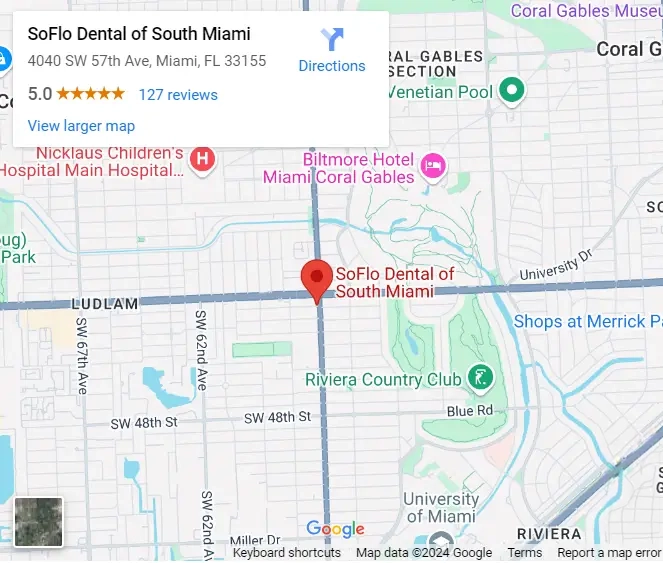
4040 SW 57th Ave, Miami, FL 33155
Working Hours
Mon: 9:00 a.m. – 5:00 p.m.
Tue: 9:00 a.m. – 5:00 p.m.
Wed: 8:30 a.m. – 8:00 p.m.
Thu: 9:00 a.m. – 5:00 p.m.
Fri: 9:00 a.m. – 5:00 p.m.
Sat: By Appointment Only
Sun: Closed

Welcome to SoFlo Dentistry, we provide exceptional dental care tailored to your needs. For appointments or inquiries.


