
Providing Relief from Periodontal Disease: Complete Guide to Periodontal Disease Treatments

If your gums bleed when you brush, your breath doesn’t feel fresh, or your teeth feel slightly loose, you’re not alone. These are common signs of gum disease, and the good news is that modern periodontal disease treatments can stop, manage, and even reverse damage when caught early.
I’ve been working in dental marketing and patient education for over 10 years, and one thing I’ve consistently noticed is this: most patients wait too long. By the time they seek help, simple treatments could have already prevented more complex procedures.
If you’re already noticing symptoms, you should also read about gum disease warning signs and prevention to understand early red flags.
Let’s fix that, starting now.
What Is Periodontal Disease?
Periodontal disease is a chronic infection of the gums and supporting bone around your teeth, caused by bacteria in plaque buildup.
It progresses in stages:
- Gingivitis – mild inflammation, reversible
- Periodontitis – infection spreads below the gums
- Advanced periodontitis – bone loss and loose teeth
According to the Centers for Disease Control and Prevention (CDC), nearly half of adults over 30 have some form of gum disease, making it one of the most common dental conditions.
Why You Shouldn’t Ignore Gum Disease
Think of your gums like the foundation of a house. If the foundation weakens, everything above it becomes unstable.
Untreated gum disease can lead to:
- Tooth loss
- Chronic bad breath
- Gum recession
- Bone deterioration
- Increased risk of systemic issues (linked to heart disease and diabetes per the American Dental Association)
There is also a strong link between oral health and systemic conditions—read more about the periodontal disease and diabetes connection.
Types of Periodontal Disease Treatments
Let’s break down the most effective gum disease treatment options, from simple to advanced.
1. Professional Cleaning (For Early Gum Disease)
If your condition is still in the gingivitis stage, this is your easiest win.
What it involves:
- Removal of plaque and tartar above the gumline
- Polishing teeth
- Personalized hygiene guidance
Best for: Mild bleeding gums and early inflammation
Regular dental cleanings and exams play a key role in preventing progression.
Pro tip: This stage is completely reversible if you act quickly.
2. Deep Cleaning Teeth (Scaling and Root Planing)
This is the most common treatment for periodontitis.
What is it?
Scaling and root planing is a deep cleaning procedure that removes bacteria below the gumline and smooths the tooth roots to help gums reattach.
Benefits:
- Stops bacterial growth
- Reduces gum pockets
- Prevents disease progression
Best for: Moderate gum infection
If you’re already experiencing symptoms like bleeding, check this guide on bleeding gums treatment.
You may need local anesthesia, but recovery is usually quick.
3. Laser Gum Treatment
Modern dentistry has made treatment for gum infection far more comfortable.
What is it?
Laser gum treatment uses focused light energy to remove infected tissue and bacteria without cutting the gums.
Why patients love it:
- Less pain and bleeding
- Faster healing
- Minimally invasive
Best for: Patients who want a less surgical approach
4. Gum Surgery Treatment (Flap Surgery)
When gum disease becomes advanced, deeper intervention is required.
What happens:
- Gums are lifted to clean deep pockets
- Bacteria and tartar are removed
- Gums are repositioned for a tighter fit
Best for: Deep pockets and significant infection
5. Gum Graft Surgery
If your gums have receded, this treatment restores lost tissue.
What is it?
Gum graft surgery involves taking tissue (usually from the roof of your mouth) and attaching it to areas where gums have receded.
Benefits:
- Protects exposed roots
- Improves appearance
- Reduces sensitivity
6. Advanced Gum Disease Treatment Options
For severe cases, dentists may combine multiple therapies:
- Bone grafting (to rebuild lost bone)
- Guided tissue regeneration
- Antibiotic therapy
Goal: Restore both function and structure
7. Periodontal Maintenance (Long-Term Care)
Here’s where most patients slip up.
After treatment, periodontal maintenance is critical to prevent relapse.
What it includes:
- Cleanings every 3–4 months
- Monitoring gum pockets
- Reinforcement of oral hygiene
Think of it like servicing your car, skip it, and problems return.
Signs You May Need Periodontal Therapy
Watch for these warning signs:
- Bleeding gums while brushing or flossing
- Persistent bad breath
- Swollen or red gums
- Gum recession (teeth look longer)
- Loose or shifting teeth
If you notice even one of these, it’s worth getting checked.
Are Periodontal Treatments Painful?
Most modern treatments are far more comfortable than people expect.
- Local anesthesia minimizes discomfort
- Laser treatments reduce pain significantly
- Post-treatment soreness is usually mild and temporary
In my experience, patients often say:
“I wish I had done this earlier.”
Cost of Periodontal Disease Treatments
Costs vary depending on severity and location.
General estimate:
- Cleaning: Low cost
- Scaling & root planing: Moderate
- Surgery: Higher
Many dental insurance plans cover part of the cost of periodontal therapy, especially when medically necessary.
How to Prevent Gum Disease from Returning
After treatment, your job is simple but crucial:
- Brush twice daily (2 minutes each time)
- Floss daily
- Use antibacterial mouthwash
- Quit smoking (major risk factor)
- Visit your dentist regularly
Staying consistent with regular dental cleanings and exams is one of the most effective preventive steps.
Consistency matters more than perfection.
Final Thoughts
The best periodontal disease treatments are the ones you don’t delay.
Gum disease doesn’t go away on its own, but with the right treatment, it’s manageable and often reversible in early stages.
If something feels off, bleeding, sensitivity, or bad breath, don’t wait. Early care saves time, money, and your natural teeth.
FAQs
What is the best treatment for gum disease?
The best treatment depends on severity. Early stages need professional cleaning, while advanced cases require scaling and root planing, laser therapy, or surgery.
Can periodontal disease be cured permanently?
Early-stage gum disease (gingivitis) can be reversed. Advanced periodontitis can be managed but not fully cured, requiring ongoing periodontal maintenance.
Is scaling and root planing painful?
Most patients feel minimal discomfort due to local anesthesia. Mild soreness may occur afterward but resolves quickly.
How long does periodontal treatment take?
Treatment can take 1–4 visits, depending on severity. Maintenance continues every few months.
Can I treat gum disease at home?
You can manage early symptoms at home, but professional treatment is required for moderate to advanced gum disease.
What happens if gum disease is left untreated?
It can lead to tooth loss, bone damage, and systemic health issues, including links to heart disease and diabetes.
Is laser gum treatment better than surgery?
Laser treatment is less invasive and offers faster healing, but not all cases qualify—your dentist will recommend the best option.
How often should I get periodontal maintenance?
Typically, every 3–4 months, depending on your condition and risk factors.
SCHEDULE YOUR VISIT!
For appointments or inquiries.
*Your Full Name
*Location
*Your Email
*Your phone number
*Message body
I allow this website to store my submission so they can respond to my inquiry.
OUR TWO LOCATIONS
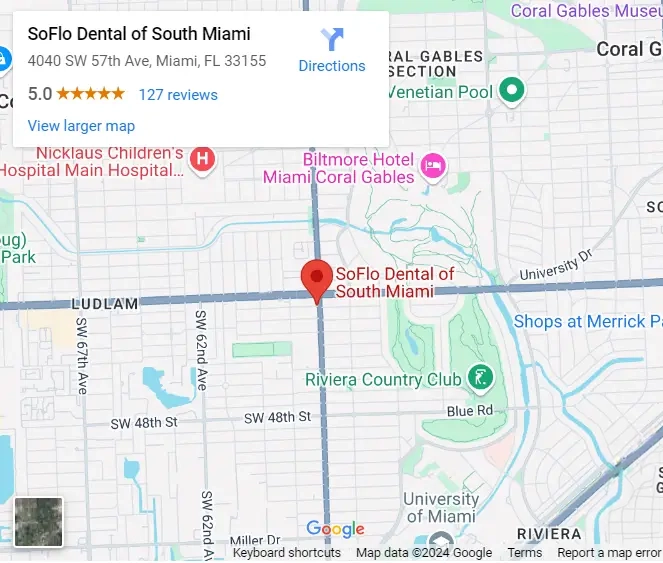
Kendall Miami & South Miami
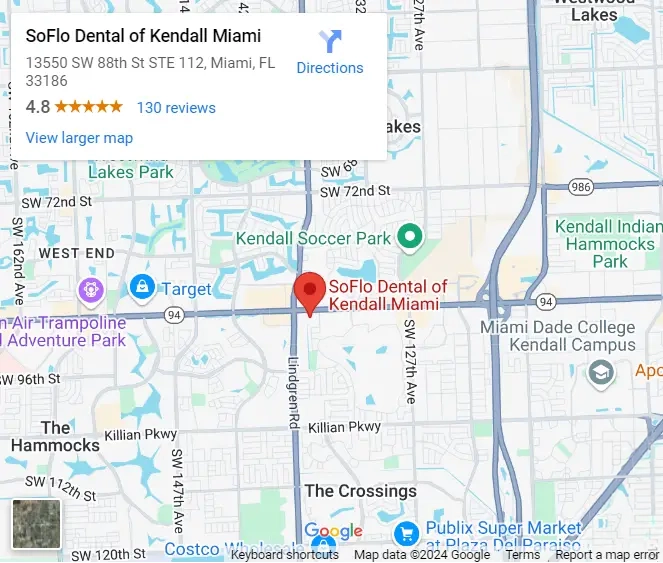
13550 SW. 88th St., Unit #112, Miami, FL 33186
Working Hours
Mon: 11:30 a.m. – 8:00 p.m.
Tue: 9:00 a.m. – 5:00 p.m.
Wed: 11:30 a.m. – 8:00 p.m.
Thu: 9:00 a.m. – 4:30 p.m.
Fri: 9:00 a.m. – 4:30 p.m.
Sat: By Appointment Only
Sun: Closed
4040 SW 57th Ave, Miami, FL 33155
Working Hours
Mon: 9:00 a.m. – 5:00 p.m.
Tue: 9:00 a.m. – 5:00 p.m.
Wed: 8:30 a.m. – 8:00 p.m.
Thu: 9:00 a.m. – 5:00 p.m.
Fri: 9:00 a.m. – 5:00 p.m.
Sat: By Appointment Only
Sun: Closed

Welcome to SoFlo Dentistry, we provide exceptional dental care tailored to your needs. For appointments or inquiries.


